
Corns and Calluses: Causes, Symptoms, Treatment, and Prevention
Abstract
- Corn and calluses are localised or widespread areas of thickened skin that are caused by continuous mechanical stress, friction, pressure, and shear (Hartsell& Spaulding,1999).
- Common areas that they develop are on the hands and feet; though generally harmless, they can cause pain, discomfort, and difficulty walking.
- Furthermore, serious complications like infections and ulceration can occur among individuals who have sensory or vascular problems like diabetes.
- The motive of this article is to outline the pathophysiology, clinical traits, diagnosis, evidence-based clinical as well as home treatment, prevention methods, and advice to the readers.
- The primary focus of this article is on addressing the mechanical cause, treatment for the condition that is softening, debridement, keratolytics and how to incorporate lasting, effective biomechanical adjustments, like shoe change orthotics, or surgery if required.
Introduction
The integumentary system(the body’s protective outer covering) protects internal tissues from damage using different methods. One method is hyperkeratosis, which is the thickening of the outer skin layer (stratum corneum) due to constant pressure or friction. This thickening can lead to calluses, which are broad areas of thickened skin, or corns, which are smaller, cone-shaped areas with a hard centre.
Although these skin lesions show that the body is protecting itself, they can still interfere with daily activities because they cause pain. This becomes a bigger problem when they appear in weight-bearing areas, such as the feet.
These lesions can also cause serious problems for people with reduced sensation or poor circulation, such as those with different types of diabetes, neuropathy, or peripheral vascular disease. Because of this, it’s important to manage the condition with proper treatment, understand what causes it, and use methods to prevent it from happening again.
Stop Recurring Corns and Calluses for Good.
Schedule a consultation at Clinic One to get precise treatment and lasting relief.
What are Corn and Calluses?
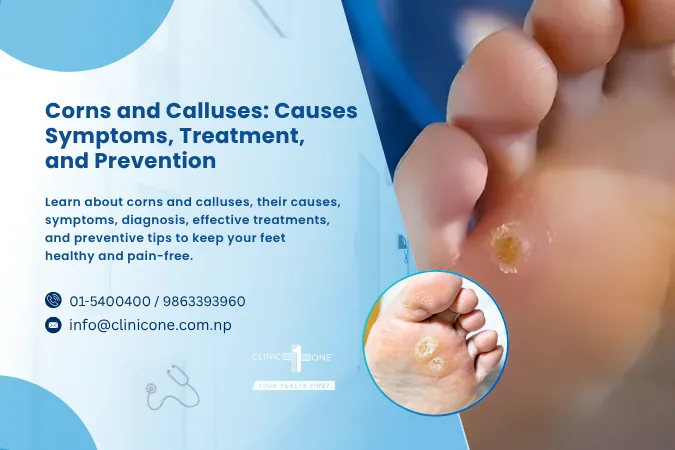
Corns, also called calvi or helomata, are small, clearly defined thick skin growths. They have a hard centre made of dense keratin that presses down on the deeper skin layers and causes pain. A hard corn creates sharp, localised pain. While soft corn becomes wet, white, and mushy because moisture gets trapped between the skin and the tissue. Soft corns usually appear between the toes.
Calluses, also called tylomas, are uneven and wide areas of thickened skin. They usually form on the feet or the palms of the hands because of repeated pressure, friction, or hard manual work. They can also appear on the heel area.
In both corns and calluses, constant friction and pressure cause the skin cells to grow faster. This makes the outer skin layer (the stratum corneum) thicker and denser, forming a hard core.
Repeated pressure also squeezes the fat pad beneath the skin, which normally protects the deeper tissues. This changes how pressure is spread across the foot and continues the cycle of thick skin buildup (hyperkeratosis).
What Are the Causes of Corn and Calluses?
Because a person’s physical activities usually cause corns and calluses rather than from medical conditions, adjusting those activities is more helpful, given these skin changes are the body’s natural response to friction and pressure, not signs of inflammation.
Primary Mechanical Cause
Mechanical overload is the main cause of corns and calluses, but that does not eliminate other factors that can also play a role in their development.
- Friction: Continued rubbing of the surface in a sideways motion leads to epidermal shear and promotes extra keratin production(keratinisation).
- Compressive pressure: Putting stress for a long time on areas like the heel or metatarsal head can increase keratinocyte growth and thicken the skin.
- Shear stress: A mix of pressure and rubbing creates tiny skin tears. As the skin heals, it becomes thicker, leading to hyperkeratosis.
- Maceration and moisture: Moisture trapped between the toes lowers the skin’s resistance to friction, which can form soft corns and create thicker, more delicate or susceptible tissue in the interdigital area(toe spaces).
Other Contributing Factors of Corn and Calluses
- Footwear: Poorly fitting shoes can cause corns and calluses. Tight shoes squeeze the tissues and increase friction, while loose shoes let the foot slide and rub also leading to the same. Additionally, wearing high heels for long periods shifts body weight forward, putting extra pressure on the forefoot.
- Anatomical abnormalities: Structural issues such as hammertoe, claw toes, bunions, hallux valgus, and prominent metatarsal heads contribute to the development of focal pressure. These spots are more likely to develop recurring corns or calluses.
- Gait and biomechanics: Abnormal foot mechanics, such as overpronation or very high arches, change how pressure distributes on the bottom of the foot. When certain areas take too much pressure, the skin thickens and hardens, forming calluses.
- Activity pattern: Individuals engaging in activities like dancing, running, musicians, artists, or manual labour tend to expose their skin to repetitive stress, causing corn and calluses. Depending on the activity, they may develop calluses on their hands, feet, or both.
- Age: With age, the fat pad on the foot reduces, and skin elasticity also decreases, which leads to increased pressure on the bony areas of the body.
- Systemic conditions: Diabetes, peripheral arterial disease, and peripheral neuropathy increase the risk of complications and can also mask symptoms associated with lesions due to reduced sensation.
Understanding the correlation between these elements is important, as they can recur if the root cause of it is not dealt with properly.
The symptoms of corns and calluses include thickened, hardened skin areas due to friction or pressure. Calluses appear as large, yellowish, painless patches, often on weight-bearing areas, while corns are smaller, painful, and have a central core. If there are cracks, infections, or changes in walking, medical attention is needed.
Common Clinical Features
Calluses
Calluses are wide, yellowish patches of hard skin that usually form on weight-bearing areas like the heels, metatarsal heads, or hands. They often do not cause pain, but people may feel heaviness under their feet or discomfort when walking, as if walking on a hard surface. Calluses become noticeable and important when this discomfort appears.
Corn
Corns are small, well-defined areas of thick, hard skin with a central core. Hard corns often cause pain when pressed vertically and can be sensitive to touch, making walking or standing uncomfortable. Soft corns, usually found between the toes, are also painful.
Warning Signs of Corns and Callus
- Cracks and hemorrhaging: In this case, immediate expert care would be required to prevent infections.
- Underlying ulceration: Individuals with diabetes have a chance that an ulcer might be present underneath the callus; hence, a professional diagnosis is highly recommended.
- Secondary infection: Macerated interdigital corn or Soft corns between the toes can get infected, showing redness, warmth, or pus. They may also produce discharge. If this happens, it is important to seek a healthcare professional for proper treatment.
- Gait distribution: Continuous pain can alter a person’s walk, which may lead to additional musculoskeletal issues, such as disorders in the hip, back, or knees.
Note: A thorough examination of an individual’s medical history and a subsequent examination focusing on the issue of corn or calluses can prevent further complications.
Diagnosis of Corns and Callus
Doctors diagnose corns and calluses through visual exams and patient history, focusing on footwear and underlying conditions. They differentiate them from conditions like plantar warts or fibromas. In some cases, doctors use X-rays, ultrasounds, or pressure mapping for deeper assessments.
Clinical Diagnosis
Doctors usually diagnose corns and calluses easily in the office through visual examination and palpation/feeling their structure, while the patient’s medical history helps identify the mechanical cause. During the exam, doctors check pain type, footwear, activity habits, and medical conditions like diabetes or neuropathy.
Professionally Differentiating Between Corn and Calluses From Imitators
Multiple conditions can resemble corn and calluses, which need to be identified.
- Plantar warts: Also known as verrucae, plantar warts disturb the usual skin patterns and have thrombosed capillaries(spots from small blood vessels) visible as dark spots. Warts can be painful when pressure is applied from the sides.
- Plantar fibroma: They are usually noticeable, deeper lumps, but are not the same as calluses and corn. A professional can differentiate between a plantar fibroma and corn.
- Skin conditions: Psoriasis and keratoderm may cause callus and lesions, like lumps. So in such cases diagnosis from a professional is highly recommended to prevent a misdiagnosis.
Additional Tests That Might Be Required to Identify Corns and Callus
Though imaging might be required in rare cases, the possibilities still exist for certain situations.
- X-ray: In a few cases, an X-ray might be used to assess bony protrusions or abnormalities when surgical intervention is needed.
- Ultrasound or MRI: When there is a doubt about deep tissue infection or a concealed ulcer underneath the thick callus, especially if the individual is diabetic, ultrasound or MRI is recommended by health professionals.
- Pressure mapping: In severe cases, pressure mapping serves as an effective tool to detect localised areas of excessive load and serves as equipment to the health professional for further treatment.
Clinical expertise paired with targeted testing guarantees precise diagnosis and suitable treatment strategies.
Treatment of Corns and Callus
Treatment for corn and callus has two focal targets: prompt symptom elevation and removal of the mechanical factor. A well-diagnosed and personalised strategy can give the most favourable outcome.
Home Remedies for Corns and Callus
- Change in footwear: Choosing the correct footwear can reduce the chances of developing corn or callus. Footwear with a broad toe box, a good amount of padding, and a small heel height is recommended. Usage of padded insoles, metatarsal pads, or custom off-the-shelf orthotics to alleviate plantar pressure distribution can also reduce stress. Socks that minimise moisture, like cotton socks or thin socks, are favourable to prevent the development of corn or callus.
- Dermatological care: Use skin exfoliating techniques properly at home. You can do it by soaking one’s foot in warm water for 10-15 minutes. This softens the thick skin, then softly file the callus using a pumice stone or a foot file, avoiding shaving harshly to prevent injuries and cuts. Use emollients with urea, lactic acid, or ammonium lactate to keep skin flexible and avoid cracking.
- Protective padding: Use non-medical felt or silicon padding to create a cushion that reduces pressure on the foot. This also prevents gait while lesions heal. Usage of interdigital toe separators provides relief in case of soft corn.
- Topical keratolytics: Salicylic acid products aid in shielding the affected area, but they are to be used with caution among individuals with diabetes, neuropathy, or a peripheral vascular condition.
- Hydrocolloid dressing: Dressings like hydrocolloid plasters can alleviate mechanical pain and help soften lesions; clinical studies indicate significant reductions in symptoms and lesion healing rates with certain products.
Home remedies are generally suitable for a lot of individuals if done properly, with the focus on the reduction of lesions combined with mechanical changes.
Medical Procedure and Treatment for Corns and Callus
- Podiatric debridement (paring): Podiatric debridement, or paring, is done by medical professionals. They carefully remove the hard skin core to reduce pressure on the tissue underneath. This quickly eases pain but does not fix the root cause. People with nerve problems may need regular debridement to lower the risk of foot ulcers.
- Medical prescription: Doctors can prescribe stronger urea or salicylic acid creams in certain cases. Topical retinoids can also be prescribed to reduce keratin thickness under supervision. Local corticosteroids may reduce adjacent inflammatory reactions in painful lesions.
- Biomechanical and orthotic adjustments: A medical professional may prescribe specific footwear or suggest shoe modifications to improve how weight is distributed across the foot. These changes can help reduce the return of corns or calluses and lower the pressure on the affected areas. Long-term changes in how the foot carries load can also be achieved through gait retraining and exercises that strengthen the small muscles inside the foot.
- Surgical adjustment: Surgery helps if bony bumps or deformities, like hammertoes, cause repeated corns. In this, procedures such as osteotomy, arthroplasty, or tendon surgery can realign the bones and remove areas of constant pressure.
- Surgical removal: Surgical removal of a corn or callus keratotic lesion is performed when conservative care fails. The surgeon typically makes a small elliptical incision and removes the entire plug of hyperkeratotic tissue down to healthy dermis, ensuring any underlying bursa or fibrotic core is excised to prevent recurrence. If a structural deformity, such as a hammer toe or bony prominence, contributes to pressure, corrective osteotomy or joint realignment may be performed in the same setting. Local anesthesia is standard, and patients usually resume normal footwear within days, with recurrence risk significantly reduced when deformity correction is included.
- In case of infection: For infected corns or crakes, suitable systemic or topical antibiotics are prescribed by the medical professionals after carefully diagnosing the affected area based on the severity of the infection.
- In case of patients with medical history: Individuals with diabetes or neuropathy are severely advised not to take any over-the-counter medication steps. They are advised to see a medical professional if they feel any kind of discomfort because of the corn or callus.
When to See a Doctor?
A professional evaluation is recommended if any of the following factors are observed:
- Intense or ongoing discomfort while walking or partaking in activities that require physical movement.
- If there is inflammation, heat, puffiness, discharge, redness or a rise in temperature of the individual, consulting a health professional is advised as these are signs of infection. (Bus & Valk, 2010)
- If there is bleeding or deep fissures, that could be due to secondary infection
- If there are signs or doubt of ulcer formation under a thick callus, especially if the individual is diabetic
- In case the corn is stubborn despite making adjustments in footwear and home remedies have been used, this can indicate a need for professional intervention through surgery.
- If there are doubts about the self-diagnosis and there is a need to be assured it’s corn, callus, wart, or other kind of problem. (Oakley, 2022)
Consulting a medical specialist early reduces the chances of complications, ensures a safe diagnosis, and provides effective treatment.
Prevention Tips.
- Wear correct footwear with a roomy toe box, low heels, a supportive midsole, and the proper shoe size. This reduces pressure and friction, decreasing the chances of developing corn or callus.
- Use metatarsal pads, full-length insoles, or custom orthotics to distribute pressure on the feet. Wear toe separators to reduce rubbing between toes. Apply moisturiser with urea or lactic acid daily to keep the skin healthy. You can also use gentle exfoliating methods to prevent thick skin buildup. Keep the areas between the toes dry to stop soft corns from forming.
- Using gloves for activities that demand intensive handwork and alternate footwear for athletic activities.
- It is recommended to regularly check one’s feet to spot development early on, especially for individuals with diabetes.
Even though prevention methods are simple but have been highly effective, most corns and calluses are avoidable with conscious behavioural change and footwear adjustment.
Conclusion
Corn and callus are predictable, logical responses of the skin to being exposed to constant stress and pressure. When managed properly, they are treatable without causing damage. A bedside diagnosis and a few treatments, along with adjustments to an individual‘s lifestyle, can remove and prevent the corn or callus. Surgery is only required in recurring, persistent or complicated cases.
If your corn or callus is painful, keeps returning, or doesn’t get better with home care, it’s important to get checked by a professional.
Clinic One has experienced surgeons who can examine your feet, give safe and effective treatment, and guide you on how to prevent the problem in the future.
Frequently Asked Questions
How can I differentiate between corn and wart?
Corns usually follow the skin’s natural lines and feel thick and hard, while warts often disrupt the skin pattern and can have small black dots, which are clogged blood vessels. Warts may also be more tender to the touch, whereas corns are typically painful when pressure is applied.
Can corn and callus come back after treatment?
Yes, corns and calluses can return if the underlying cause, such as wearing tight shoes or abnormal walking patterns, isn’t addressed. Regularly changing footwear and using foot care measures can help prevent its recurrence.
Are over-the-counter pads safe?
Yes, non-medical padding is generally safe and helpful, but patients with diabetes, neuropathy or poor circulation should avoid using keratolytic pads containing salicylic acid due to the risk of skin breakdown.
How often should individuals with diabetes have their feet checked?
People with diabetes should inspect their feet daily and have at least yearly professional foot examination; individuals with neuropathy, history of ulcer or vascular diseases should have their feet checked more often.
When is surgery necessary?
Surgery may be needed if the corn is persistent, keeps returning after treatment, or causes significant pain that limits daily activities. A podiatrist can help determine if surgery is the best option after other treatments have failed.
References:
Al Aboud, K., & Yarrarapu, S. N. S. (2023). Corns. In StatPearls. StatPearls Publishing. https://www.ncbi.nlm.nih.gov/books/NBK470374/
Bus, S. A., & Valk, G. D. (2010). Offloading and footwear effectiveness in diabetic foot ulcer prevention. Diabetes/Metabolism Research and Reviews, 26(S1), S162–S171. https://pubmed.ncbi.nlm.nih.gov/16100097/
Hartsell, H. D., & Spaulding, S. J. (1999). The relationship between mechanical loading and plantar callus formation. Journal of Orthopaedic & Sports Physical Therapy, 29(3), 169–174. https://pubmed.ncbi.nlm.nih.gov/12074526/
Oakley, A. (2022). Calluses and corns. MSD Manual Professional Edition. https://www.msdmanuals.com/professional/dermatologic-disorders/cornification-disorders/callus es-and-corns
Rhoades, E. H., & Smith, J. (2021). Hyperkeratosis. In StatPearls. StatPearls Publishing. https://www.ncbi.nlm.nih.gov/books/NBK562206/
Singh, G. (1996). Plantar warts: Clinical features and management. American Family Physician, 55(8), 2277–2282. https://www.aafp.org/pubs/afp/issues/2002/0601/p2277.html

![Best Nephrologist in Kathmandu, Nepal | Dr Diwakar Manandhar [NMC No. 12395]](https://clinicone.com.np/wp-content/uploads/2026/08/Best-nephrologist-in-kathmandu.webp "Best Nephrologist in Kathmandu, Nepal | Dr Diwakar Manandhar [NMC No. 12395]")