
Why Do I Have Corns and Calluses? Causes
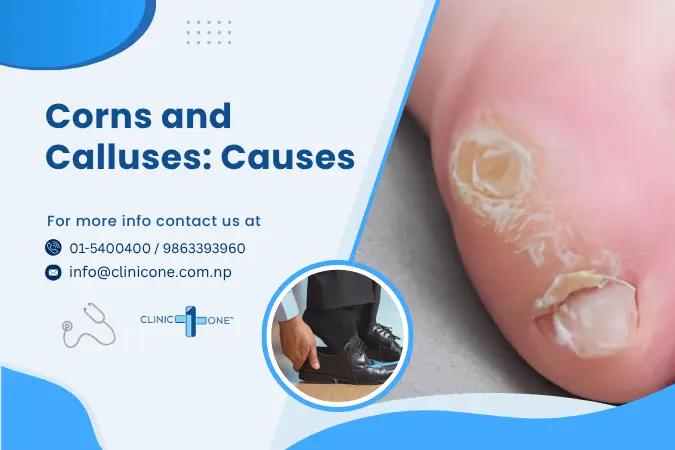
You may notice a small rough patch on your foot at first. It doesn’t seem serious, so you ignore it. But slowly, it thickens, and soon even simple walking starts to feel uncomfortable. This is how corns and calluses usually form.
What makes it worse is that this discomfort doesn’t go away on its own. The more pressure or rubbing your feet are exposed to, the more the skin builds up layers for protection. Over time, what started as a minor issue can turn into persistent pain.
The good news is, this doesn’t happen without a reason. Once you understand the causes of corns and callus formation, it becomes much easier to prevent them from appearing in the first place.
के तपाई ठेला, खिल, कडा छाला वा कुर्कुच्चा च्यातिने समस्या ले चिन्तित हुनुहुन्छ? अब चिन्ता नगर्नुहोस् किनकि क्लिनिक वान छदैछ नि!
हाम्रा विशेषज्ञहरूले तपाईंको समस्याको सावधानी पूर्वक परीक्षण गरी, छिटो तथा प्रभावकारी राहतका लागि सुरक्षित एवं कुशल उपचार सेवा प्रदान गर्छन्।
What Are Corns and Calluses?
Both corns and calluses fall under the medical term hyperkeratosis, which refers to the thickening of the outer layer of the skin as a protective response.
Corns are small, localised areas of thick skin that usually develop on the tops or sides of the toes. They often have a hard, central core that can press into deeper tissues and nerves, leading to sharp or pinpoint pain.
Calluses, on the other hand, are larger and flatter patches of thickened skin. They commonly form on weight-bearing areas such as the soles of the feet, especially the heels or balls of the feet. Unlike corns, they are usually not painful unless the skin becomes dry and starts to crack.
Even though they look different, both conditions develop for the same reason: repeated pressure and friction on the skin over time.
Primary Cause of Corns and Calluses
The most common causes of corn and callus are external factors that make the skin work harder to protect itself. When there is repeated rubbing or pressure, the skin responds by producing extra layers of keratin. This is a natural defence mechanism to prevent deeper damage or blistering.
Ill-Fitting Footwear
Shoes that don’t fit properly are one of the biggest triggers. If they are too tight, they compress the foot and create constant pressure points. On the other hand, loose shoes allow the foot to slide, causing repeated friction.
On the other hand, high heels are especially problematic because they shift body weight forward onto the front of the foot, leading to excessive pressure and thickened skin over time.
Skipping Socks
Socks act as a protective barrier between your skin and footwear. They reduce friction and also absorb sweat, keeping the feet more comfortable.
Without socks, especially inside sneakers or boots, direct skin-to-shoe contact increases. As a result, the skin begins to harden as a protective response, which eventually leads to callus formation.
Repetitive Motion and Activity
Certain activities place continuous stress on specific areas of the body. Athletes, runners, gym-goers, and manual workers are especially prone to this.
For example, runners often develop calluses on the soles due to repeated impact, while weightlifters or guitar players may notice them on their hands. These are sometimes called functional calluses, but they can become problematic when they become too thick or painful.
Lack of Protective Padding
The natural fat pad under your skin helps absorb pressure. When this cushioning reduces, the skin becomes more exposed to stress.
This is more common in older adults or people who have experienced significant weight loss. Without this natural protection, even everyday activities can lead to thickened skin over time.
Walking Barefoot Frequently
Regularly walking barefoot on hard or rough surfaces increases direct pressure on the skin. This leads to repeated friction and impact on specific areas of the foot.
Over time, the skin adapts by becoming thicker and harder, which contributes to callus formation.
Tired of dealing with constant foot pain? It’s time to fix it!
Visit Clinic One for expert diagnosis, safe removal, and long-term solutions.
Anatomical Factors That Cause Corns and Calluses
Sometimes, the issue isn’t just external. Certain structural problems in your feet can increase the risk of forming corn and callus by creating uneven pressure on specific areas. These might include bone spurs, bunions, hammertoes, or misaligned bones.
When weight is not distributed properly, some parts of the skin take more stress than they should, leading to thickening over time.
Bone Spurs and Prominent Joints
Bone spurs are small, bony growths that develop along the edges of bones. When they form near the toe joints, they can rub continuously against the inside of your shoes even if the shoes fit well.
This constant contact creates pressure in the same spot again and again, making it one of the most common reasons for recurring corns.
Foot Deformities
Conditions like hammertoes and bunions change the natural shape of your foot. A hammertoe bends downward, while a bunion creates a bony bump near the base of the big toe.
Because of these changes, your foot no longer fits evenly inside your shoes. This leads to uneven pressure on feet, especially in areas that aren’t designed to cope with stress. Over time, the skin reacts by becoming thicker in those spots.
Gait Abnormalities
Everyone has a slightly different walking style. But when the movement becomes uneven, such as rolling your foot inward (pronation) or outward (supination), it shifts pressure to unusual areas.
This kind of imbalance is a common cause of corns and calluses because certain parts of the foot end up handling more force than they should. As a result, the skin gradually thickens to protect itself.
Other Risk Factors That Increase the Chances of Developing Corns and Calluses
While external pressure is the main trigger, certain factors can make some people more prone to corn and callus. These don’t directly create the problem but increase the likelihood of developing it over time.
Age
As we grow older, the natural fat padding under our feet gradually becomes thinner. This layer normally acts as a cushion, absorbing shock and reducing pressure.
With less protection, the skin is exposed to more stress during everyday activities, which increases the chances of thickened skin developing.
Diabetes and Circulation Issues
This is one of the most important risk groups. People with diabetes often experience poor circulation and nerve damage (peripheral neuropathy).
Because of reduced sensation, they may not notice a corn or callus forming. What starts as a minor issue can quickly progress into a more serious condition, such as an ulcer or infection, if not managed early.
Occupational and Lifestyle Factors
Certain jobs and daily routines increase repeated stress on specific areas of the body. People who stand for long hours or use their hands frequently are more exposed to constant pressure and friction.
This makes occupations involving prolonged standing or repetitive motion a common cause of corns and calluses over time.
Poor Foot Care Habits
Foot care plays a bigger role than most people realise. While it may not directly cause the condition, neglecting it can make things worse.
Not moisturising regularly, ignoring early signs like rough or thick skin, and delaying care can all lead to thickened skin on toes becoming more severe over time.
Common Areas Where They Develop
Where corns and calluses appear can often give you a clue about what’s causing them in the first place. Different areas of the body experience different types of pressure, and that’s where these thickened patches tend to form.
By paying attention to where they form, such as toes, heels or hands, you can better understand what might be putting stress on your skin and take necessary steps to reduce it.
- Toes: Corns commonly develop here, especially on the tops or sides. This is usually linked to tight or narrow shoes that press the toes together.
- Soles of the feet: Calluses often form on the bottom of the feet due to regular pressure from walking or standing for long periods.
- Heels: Repeated impact, especially on hard surfaces, can lead to thickened skin around the heels. Dry skin can make this area more prone to cracking as well.
- Hands and fingers: Calluses can also appear on the hands, often due to repeated use of tools, instruments, or activities that involve gripping.
Now that you have learned the causes of forming corn and calluses, let’s discuss some ways you can treat them.
How to Treat and Manage Corns and Calluses
To effectively manage corn and callus (Secondary), reduce the pressure or friction that caused them. Once that stress is removed, the skin can gradually return to normal. To treat these problems at home, use salicylic acid, keep skin hydrated, use a cushion, soak, and exfoliate.
In cases where home treatment won’t work, seek help from a specialist related to foot and ankle problems. They can identify the root cause and safely remove it.
- Wear Proper Footwear: Choosing the right shoes plays a major role in prevention and treatment. Proper footwear directly reduces one of the biggest triggers behind these conditions. Look for:
-
- A wide toe box
- Good cushioning
- A comfortable fit without tight spots
- Use Salicylic Acid: Over-the-counter products containing Salicylic Acid (LSI) can help break down thickened skin. This ingredient works by softening and dissolving keratin, the protein that builds up in corns and calluses.
Important Note: Use these treatments carefully, especially if you have sensitive skin, as overuse can cause irritation.
- Soak and Gently Exfoliate: Soaking your feet in warm, soapy water for 10-20 minutes helps soften hardened skin. After that, gently rub the area with a pumice stone or foot file. This simple routine helps reduce buildup linked to callus formation.
Important Note: Avoid scrubbing too hard, as it can damage healthy skin.
- Keep Skin Hydrated: Daily moisturising is essential. Creams containing urea (LSI) are especially effective because they soften thickened skin and improve hydration. Keeping the skin soft also helps prevent cracks and discomfort.
- Use Cushioning: Adding cushioned insoles, gel pads, or protective patches inside your shoes can reduce pressure on sensitive areas. This allows the skin to heal while preventing further irritation.
- Manage Moisture and Friction: Keeping your feet dry can significantly reduce friction. Wear moisture-wicking socks and breathable shoes to control sweat. This small habit can help prevent many common callus formations.
- Use Protective Padding: Non-medicated foam or felt pads can be applied to protect sensitive areas. These reduce pressure during daily activities and help prevent the condition from getting worse.
- Medical Treatment (When Needed): If home care isn’t enough, it’s best to consult a specialist. A podiatrist can safely remove thickened skin using sterile tools through a procedure called debridement. This provides quick relief, especially in more severe cases where surface treatments are not effective.
When to Seek Medical Help
It can be tempting to try quick fixes at home, like cutting or trimming thickened skin. However, this can do more harm than good. We highly discourage this due to the increased risk of infection.
Seek professional help if:
- You have ongoing pain or discomfort while walking
- The corn or callus starts to bleed or ooze fluid
- You have existing conditions like diabetes or poor circulation
- The pain begins to affect your daily routine
- You notice signs of infection, such as redness, swelling, warmth, or tenderness
Corn and Callus Treatment at Clinic One
At Clinic One, treatment goes beyond removing the thickened skin; we focus on fixing the root cause. Our specialists carefully assess your feet, identify pressure points, and provide safe, professional removal of corn and calluses to deliver quick, effective relief.
For more persistent or severe cases, we also offer advanced solutions, including orthopedic interventions when needed. This is done especially when the underlying issues are foot structure.
With a strong focus on both treatment and long-term prevention, our goal is simple: to help you stay comfortable, mobile, and free from recurring pain.
Book your appointment now and walk comfortably again
FAQs
Why am I getting corns and calluses?
You develop corns and calluses mainly due to repeated friction or pressure on specific areas of the skin. This often happens from wearing tight shoes, standing for long hours, or walking in an uneven way. Your skin responds by thickening to protect itself. Over time, this protective layer becomes hard and uncomfortable.
How can I permanently get rid of corns and calluses?
There is no instant, permanent cure unless you remove the root cause of pressure or friction. You need to correct footwear choices, reduce repeated rubbing, and manage foot pressure properly. In persistent cases, medical treatment or orthotics may be required. Without addressing the cause, they often return.
What is the most common cause of corns?
The most common cause of corns is wearing ill-fitting shoes that press or rub against the toes. Tight or narrow footwear increases friction in specific areas of the foot. High heels can also shift pressure unnaturally and worsen the problem. This constant irritation leads to hard, painful skin buildup.
What causes corns and calluses on the feet?
Corns and calluses on the feet develop from repeated pressure during walking, running, or long hours of standing. Poorly fitting shoes or a lack of cushioning also play major roles as they increase friction. Structural foot issues like flat feet or bunions can make the problem worse.
What causes corns and calluses on hands?
On hands, corns and calluses usually form from repetitive manual activities. This includes using tools, lifting weights, or doing physical labour without protection. Constant rubbing or pressure causes the skin to harden in those areas.
![Best Nephrologist in Kathmandu, Nepal | Dr Diwakar Manandhar [NMC No. 12395]](https://clinicone.com.np/wp-content/uploads/2026/08/Best-nephrologist-in-kathmandu.webp "Best Nephrologist in Kathmandu, Nepal | Dr Diwakar Manandhar [NMC No. 12395]")