
Colonoscopy in Kathmandu, Nepal at Clinic One

Get Safe and Precise Colonoscopy Done by Experienced Gastroenterologists
Colonoscopy is a procedure that allows a gastroenterologist to examine the large intestine (colon) and rectum using a thin, flexible camera. At Clinic One, all colonoscopy procedures are performed by senior gastroenterologists with years of experience in diagnosing and managing diseases affecting the colon and lower digestive tract.
Clinic One, Your Trusted Partner for Colonoscopy and Digestive Care in Kathmandu
📞 01-5400400 / 9863393960
Why Choose Us
Our Colonoscopy Services
At Clinic One, we perform diagnostic colonoscopy to examine the large intestine and rectum and investigate symptoms affecting the lower digestive tract.
Diagnostic Colonoscopy
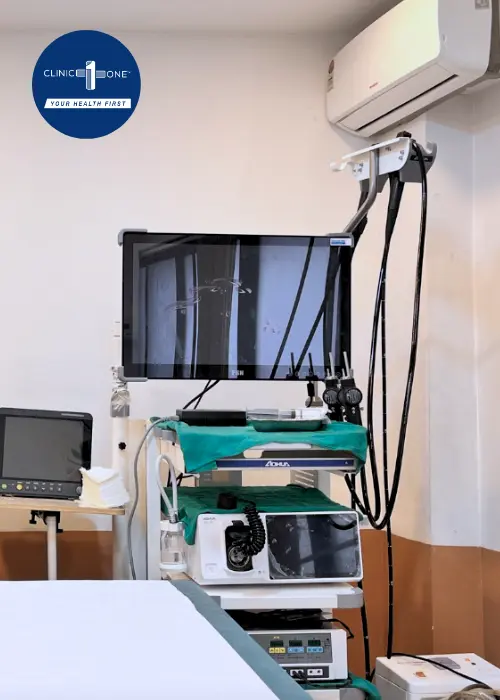
Diagnostic colonoscopy helps evaluate rectal bleeding, changes in bowel habits, chronic diarrhea, unexplained constipation, abdominal pain, unexplained weight loss, and other colorectal symptoms. During the examination, our gastroenterologists can identify inflammation, ulcers, polyps, tumours, diverticular disease, and other abnormalities affecting the colon and rectum.
Who Performs Colonoscopy at Clinic One?

ENDOSCOPY PRICE IN NEPAL
Colonoscopy Care That Delivers Real Value
A colonoscopy is not just a diagnostic procedure; it is an important examination that can help detect conditions affecting the colon and rectum at an early stage. At Clinic One, we focus on careful examination, clear explanation of the findings, and appropriate follow-up recommendations based on the results. We aim to provide specialist-led colonoscopy and endoscopy care that is accessible, transparent, and centred on your long-term digestive health.
Our Approach to Colonoscopy
At Clinic One, we recommend colonoscopy when it is clinically appropriate and likely to provide important information about your colorectal health.
Our gastroenterologists begin with a detailed evaluation of your symptoms, medical history, and any previous investigations to determine whether a colonoscopy is the most appropriate examination.
Before the procedure, we provide clear bowel preparation instructions because proper preparation is essential for precise examination. During the colonoscopy, we carefully examine the lining of the colon and rectum and assess for polyps, inflammation, bleeding, tumours, and other abnormalities.
If we identify polyps or abnormal tissue during the examination, we may remove or sample(biopsies) them when clinically indicated. After the procedure, we explain the findings, discuss any additional investigations if required, and provide treatment and follow-up recommendations based on the results.
When Is Colonoscopy Recommended?
Your doctor may recommend a colonoscopy if you have:
- A family history of colorectal cancer or colon polyps
- Iron deficiency anemia
- Unexplained abdominal pain
- A persistent change in bowel habits
- Rectal bleeding or blood in the stool
- Any suspected need for colorectal cancer screening
- Unexplained weight loss
- Chronic diarrhea or constipation
- Positive stool blood test results
- Suspected inflammatory bowel disease
Benefits of Having an Early Colonoscopy Procedure
Recovery and Precautions for Colonoscopy
- Diabetes medications
- Heart, kidney, or lung diseases
- Allergies to medications
- Previous colonoscopy reports
- Any significant medical conditions
- Blood thinners or antiplatelet medications
After the procedure, to support recovery:
- Drink plenty of fluids
- Resume your diet as advised by your doctor
- Avoid alcohol for the rest of the day
- Resume medications only as instructed
- Rest for the remainder of the day if sedation was used
- Seek medical help if you develop severe abdominal pain, fever, persistent bleeding, or repeated vomiting
Risks and Possible Complications
Colonoscopy is generally a safe procedure when performed by an experienced gastroenterologist. However, as with any medical procedure, complications can occasionally occur.
Contact your doctor immediately if you experience:
- Fever or chills
- Difficulty breathing
- Persistent vomiting
- Dizziness or fainting
- Heavy rectal bleeding
- Severe abdominal bloating
- Inability to pass stool or gas
- Excessive weakness or confusion
- Severe or worsening abdominal pain
Let’s Help You Find the Right Care
Changes in bowel habits, rectal bleeding, unexplained abdominal pain, or other persistent colorectal symptoms should not be ignored. At Clinic One, our experienced gastroenterologists provide careful evaluation, colonoscopy, and personalised treatment recommendations based on your individual condition.
If you are experiencing ongoing colorectal symptoms or have been advised to undergo a colonoscopy, book a consultation with our gastroenterology team and take the next step toward better digestive health.
Frequently Asked Questions
What is a colonoscopy?
A colonoscopy is a procedure that uses a thin, flexible camera to examine the colon and rectum. It helps diagnose conditions such as colon polyps, inflammation, bleeding, colorectal cancer, and other diseases affecting the lower digestive tract.
Who performs the colonoscopy at Clinic One?
At Clinic One, colonoscopy is performed by Dr Rabin Sharma, DM (Gastroenterology & Hepatology), a senior consultant gastroenterologist with extensive experience in colonoscopy and evaluation of colorectal disease. He has performed numerous colonoscopies and provides comprehensive evaluation, treatment planning, and follow-up care for patients with lower digestive symptoms.
Is colonoscopy painful?
Colonoscopy is usually not painful for most patients. When clinically appropriate, sedation may be used to make the procedure more comfortable, and some patients may experience temporary bloating, cramping, or mild abdominal discomfort afterwards.
How do I prepare for a colonoscopy?
Before the procedure, our team will provide detailed bowel preparation instructions, including dietary restrictions and bowel-cleansing medication. It is important to follow these instructions carefully, as bowel preparation is necessary for a complete examination of the colon and rectum.
How long does a colonoscopy take?
Most colonoscopy procedures are completed within approximately 20 to 40 minutes. The exact duration may vary depending on the quality of bowel preparation, the findings during the examination, and whether a biopsy or polyp removal is required.
Because colonoscopy is usually performed as a day-care procedure, most patients can return home the same day after a brief observation period.
How long is the recovery period?
Most patients recover within a few hours after a colonoscopy and can usually return to normal activities the following day. If sedation is used, you should rest for the remainder of the day and avoid driving or alcohol until the effects have completely worn off. Recovery may take slightly longer if a biopsy is taken or a polyp is removed during the procedure.
Do I need to stay in the clinic after the procedure?
In most cases, colonoscopy is performed as a day-care procedure, so admission is not required. After a short observation period, most patients can return home on the same day once they are medically stable. Before discharge, our gastroenterologist will explain the findings, provide aftercare instructions, and arrange follow-up if further treatment is required.
Can polyps be removed during colonoscopy?
Yes. If polyps are found during the examination, our gastroenterologist can often remove them during the same procedure when clinically appropriate. Removing polyps during colonoscopy may help reduce the risk of colorectal cancer developing in the future.
![Best Gastroenterologist in Kathmandu, Nepal | Dr. Rabin Sharma [NMC No: 5677]](https://clinicone.com.np/wp-content/uploads/2025/07/Best-Gastroenterologist-in-Kathmandu-1.webp "Best Gastroenterologist in Kathmandu, Nepal | Dr. Rabin Sharma [NMC No: 5677]")

September 29, 2022 @ 8:48 pm
Hello. I live in the USA and am also in the fight against cancer. I am a Cancer Outreach Coordinator who is working to improve screening rates in underserved populations. May I use the drawing on the colonoscopy site? Do you have any colonoscopy literature in Nepali/Hindi that we could use with our large Nepali/Bhutanese population?
Best of Health to you!
April 9, 2023 @ 12:28 am
I need to do colonoscopy I am having pain and cramps for more than three months that doesn’t go. How much do you change ? And do I need to do cat scan too
July 10, 2023 @ 11:45 am
Hello doctor I’m 35 years old, I have blood in my stool since 14 days , it happens before also but not this much longer but this time I have a long bleeding, I have a little bit dizzy and my pressure also high but now the pressure is ok but I still have bleeding in my stool eve I’m in diet , eating greenery vegetables everyday.
July 17, 2023 @ 4:47 pm
Please consult with a doctor immediately. For appointments & inquiries: 01-5400400, 9863393960
October 16, 2023 @ 3:29 pm
Namaste Doctor, I had ulcerative colitis in 2015 since then I do test every 2 years and I do use VAGA OD on twist a daily but I haven’t check since 3 years and I am now 44 Year. Now a day I don’t have any issues on my body. Sir do i need to checkup these days?
March 31, 2024 @ 12:58 pm
I feel bowel movements when I am nervous and I am uncomfortable in day to day life.