
Types of Circumcision: Understanding Different Circumcision Procedures
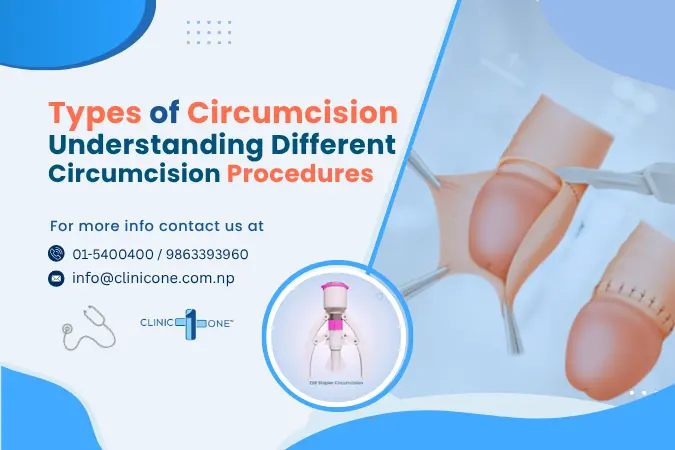
Many of you may already be familiar with circumcision. Today, several types of circumcision are available, ranging from traditional surgical methods to more advanced technology-based approaches. Each type differs in its technique, instruments used, healing process, and cost.
Despite these differences, all techniques share the same objective: the removal of the foreskin (double-layered fold of skin that covers and protects the head or glans of the penis).
What Are the Different Types of Circumcision?
Circumcision methods can be broadly classified into three main categories:
- Conventional surgical circumcision: These methods only use normal surgical instruments. It usually involves these techniques:
-
- Dorsal slit circumcision
- Sleeve resection circumcision
- Dorsal slit-sleeve circumcision
- Forceps-guided circumcision
- Device-based circumcision: In this method, surgeons or urologist/andrologists use special devices strictly made for foreskin removal. It consists of:
-
- Plastibell circumcision
- Sheldon clamp circumcision
- Gomco clamp circumcision
- Mogen clamp circumcision
- Modern/technology-assisted circumcision: Surgeons use advanced techniques like staplers and lasers to remove the retractable skin. It includes:
- Laser circumcision
- Stapler circumcision (ZSR)
- Thermocautery-assisted circumcision
While the individual methods differ, all types of circumcision procedures share the same goal: safe removal of the foreskin with preservation of normal penile anatomy and function. They differ in the instruments used, the approach taken, and the situations in which they are most commonly performed.
Not Sure Which Circumcision Method Is Right for You?
At Clinic One, our experienced urologists can assess your condition and recommend the most appropriate treatment option for you.
Conventional Surgical Circumcision Methods
Conventional surgical circumcision is the traditional approach to foreskin removal. In these procedures, the surgeon uses standard surgical instruments to remove the foreskin and then controls bleeding using sutures, cautery, or other surgical techniques. These methods remain widely used because they allow the surgeon to precisely determine how much foreskin to remove and adapt the procedure to the patient’s anatomy.
Several conventional circumcision techniques exist, each with a slightly different approach. The choice of technique often depends on the patient’s age, the condition of the foreskin, and the surgeon’s experience.
Dorsal Slit Circumcision
Dorsal slit circumcision involves making a single incision along the upper side of the foreskin before removing the excess tissue. This technique helps open a tight foreskin and provides better access to the glans during the procedure.
Doctors commonly use the dorsal slit technique when the foreskin cannot be easily retracted, such as in patients with severe phimosis. Because the incision allows the foreskin to be opened before removal, it can make the procedure safer and more controlled in certain situations.
The main advantages of dorsal slit circumcision include simplicity, good visibility during surgery, and suitability for patients with a tight foreskin. However, it may not always provide the same cosmetic outcome as some other circumcision techniques.
Sleeve Resection Circumcision Dorsal Slit Circumcision
Sleeve resection circumcision removes the foreskin by making two circular incisions, one on the outer foreskin and one on the inner foreskin. The tissue between these incisions is then removed, creating a sleeve-like excision pattern.
Many surgeons consider sleeve resection one of the most precise circumcision techniques because it allows controlled removal of foreskin while preserving a symmetrical appearance. This technique is commonly used in adolescents and adults, particularly when cosmetic results are an important consideration.
The procedure can provide excellent aesthetic outcomes and allows accurate control over the amount of tissue removed. However, it may require more surgical expertise and can take longer than some simpler methods.
Dorsal Slit-Sleeve Circumcision Sleeve Resection Circumcision
The dorsal slit-sleeve technique combines elements of both the dorsal slit and sleeve resection methods. The surgeon first performs a dorsal slit to expose the foreskin and then completes the circumcision using a sleeve-style excision.
This combined approach can be particularly useful in patients with significant phimosis or difficult foreskin anatomy. By incorporating the strengths of both techniques, surgeons can achieve better visibility during surgery while still maintaining precise tissue removal.
Many urologists use this method when they need both surgical control and improved cosmetic outcomes.
Forceps-Guided Circumcision
Forceps-guided circumcision uses surgical forceps to hold and guide the foreskin before it is removed. The forceps help protect underlying structures while providing a clear guide for the surgical incision.
This technique is often valued for its simplicity and efficiency. Because the forceps create a defined cutting plane, the procedure can be performed relatively quickly while maintaining surgical accuracy.
Forceps-guided surgery is commonly used in both children and adults, although suitability depends on the patient’s anatomy and the surgeon’s preference. As with all conventional surgical techniques, outcomes depend heavily on proper surgical planning and experience.
Device-Based Circumcision Methods
Device-based circumcision uses specially designed medical devices to assist with foreskin removal. Unlike conventional surgical techniques, which rely primarily on surgical incisions and suturing, these methods use clamps or rings to help secure the foreskin, reduce bleeding, and standardise the procedure.
Many device-based circumcision techniques are commonly used in newborns and infants because they can simplify the procedure and provide predictable results. However, some devices may also be suitable for older children depending on the clinical situation and the healthcare provider’s experience.
Plastibell Circumcision
Plastibell circumcision is one of the most commonly used circumcision methods in newborns and young infants. The procedure uses a small plastic ring called a Plastibell device, which is placed under the foreskin and over the glans.
Once the ring is in position, a surgical thread is tied tightly around the foreskin over the ring. This cuts off the blood supply to the excess foreskin, causing it to dry up and separate naturally over the following days. The plastic ring usually falls off on its own within one to two weeks.
One of the main advantages of Plastibell circumcision is that it generally causes minimal bleeding because the ligature compresses the blood vessels before the foreskin separates. It is also a relatively simple procedure that does not usually require sutures.
However, Plastibell circumcision is most suitable for newborns and infants. The ring must be correctly sized, and parents need to monitor the area until the device falls off naturally.
Sheldon Clamp Circumcision
The Sheldon clamp is a circumcision device designed to compress the foreskin before removal. By applying controlled pressure to the tissue, the clamp helps reduce bleeding during the procedure and provides a guide for foreskin excision.
Although the Sheldon clamp is less commonly discussed than some other circumcision devices, it follows the same principle of protecting underlying structures while assisting the surgeon in performing a controlled circumcision.
The technique aims to improve procedural consistency and reduce the risk of excessive tissue removal. As with other clamp-based methods, successful outcomes depend on proper device selection and operator experience.
Gomco Clamp Circumcision
The Gomco clamp is one of the most widely used circumcision devices, particularly in newborns. It consists of several components that work together to protect the glans while compressing the foreskin before removal.
During the procedure, the foreskin is positioned over a protective bell-shaped component. The clamp then applies pressure to the foreskin, which helps reduce bleeding when the excess tissue is removed.
Many healthcare providers prefer the Gomco clamp because it offers good visibility during the procedure and provides reliable bleeding control. It has a long history of use and remains a popular option for infant circumcision in many healthcare settings.
Like other device-based methods, proper sizing and technique are important to ensure safe and effective results.
Mogen Clamp Circumcision
The Mogen clamp is another commonly used device for newborn circumcision. Unlike the Gomco clamp, which uses a bell-shaped component, the Mogen clamp works by compressing the foreskin between two flat blades before it is removed.
One advantage of the Mogen clamp is that the procedure can often be completed quickly. The device allows rapid foreskin removal while helping control bleeding through tissue compression.
Because the glans is not directly visualised during part of the procedure, the technique requires careful attention and experience. When performed correctly, Mogen clamp circumcision can provide efficient and effective results.
The Mogen clamp is commonly used in newborn circumcision but is generally less suitable for older children and adults.
Modern/Technology-Assisted Circumcision Methods
Technology-assisted circumcision uses modern surgical tools and energy-based devices to perform or support foreskin removal. Unlike conventional surgical methods that rely mainly on manual cutting and suturing, these techniques use advanced technology to improve precision, reduce bleeding, and make the procedure more efficient in selected cases.
These methods are commonly used in adolescents and adults, especially when patients prefer faster procedures or when surgeons aim for improved bleeding control and cosmetic outcomes.
Laser Circumcision
Laser circumcision uses focused laser energy to cut and remove the foreskin. The laser helps make precise incisions while simultaneously sealing small blood vessels, which reduces bleeding during the procedure.
The main goal of laser circumcision is improved precision and cleaner tissue cutting. Many patients prefer it because it may result in less intraoperative bleeding and a more controlled surgical field.
However, it is important to understand that laser circumcision is still a surgical procedure. It does not eliminate all risks or completely replace conventional techniques. The skill of the surgeon remains the most important factor in ensuring safe and effective results.
Laser circumcision is generally used in older children, teenagers, and adults, depending on clinical need and availability of equipment.
Stapler Circumcision (ZSR Circumcision)
Stapler circumcision, also known as ZSR circumcision, uses a circular stapling device designed to remove the foreskin in a single, controlled step. The device cuts and staples the tissue simultaneously, which helps close the wound edges immediately after removal.
One of the main advantages of stapler circumcision is speed. The procedure is often completed faster than many conventional surgical techniques. It also provides uniform tissue removal and may reduce operative bleeding due to simultaneous sealing.
Patients often consider stapler circumcision for its perceived convenience and quicker procedure time. However, it still requires proper surgical evaluation, and not all patients are suitable candidates for this technique.
Stapler circumcision is commonly performed in adolescents and adults.
Thermocautery-Assisted Circumcision
Thermocautery-assisted circumcision uses heat energy to cut tissue and control bleeding at the same time. The device applies controlled heat to the surgical area, allowing the surgeon to remove the foreskin while sealing small blood vessels.
This method helps reduce bleeding during surgery and can improve visibility for the surgeon. It is often used in cases where bleeding control is a priority or where precise surgical management is needed.
Like other technology-assisted methods, thermocautery circumcision still depends heavily on surgeon expertise and proper technique. It is not a completely separate procedure but rather an enhancement of conventional surgical circumcision.
These methods do not replace conventional or device-based techniques but rather complement them. The choice of method depends on medical suitability, anatomical factors, and the clinical judgment of the surgeon.
Use of Different Circumcision Types Based on Age Groups
Age plays an important role in determining which circumcision method may be most appropriate. The size of the penis, foreskin anatomy, healing capacity, and surgical goals can all influence the choice of technique.
While many circumcision methods can be adapted for different patients, certain procedures are more commonly used in specific age groups. Healthcare providers consider these factors when recommending the most suitable circumcision approach.
Circumcision Methods for Infants and Young Children
As children grow older, healthcare providers may use either device-based or conventional surgical techniques depending on the clinical situation.
Common options include:
- Plastibell circumcision (in selected infants)
- Sheldon clamp circumcision
- Dorsal slit circumcision
- Forceps-guided circumcision
Children who require circumcision for medical reasons, such as phimosis or recurrent foreskin infections, may benefit from conventional surgical techniques that allow greater flexibility during the procedure.
At this stage, the surgeon can tailor the approach based on the child’s anatomy and the underlying reason for circumcision.
Circumcision Methods for Adolescents
Circumcision in adolescents often requires a different approach than newborn circumcision because the foreskin and surrounding tissues are more developed.
Commonly used techniques include:
- Sleeve resection circumcision
- Dorsal slit circumcision
- Dorsal slit-sleeve circumcision
- Stapler circumcision (ZSR)
- Thermocautery-assisted circumcision
These methods allow precise tissue removal and can accommodate a wider range of anatomical variations.
For adolescents undergoing circumcision because of phimosis, recurrent infections, or personal preference, surgeons often select a method that balances safety, functionality, and cosmetic appearance.
Circumcision Methods for Adults
Adults have the widest range of circumcision options available. The choice of procedure depends on the medical indication, foreskin condition, cosmetic outcomes, and surgeon expertise.
Common adult circumcision methods include:
- Sleeve resection circumcision
- Dorsal slit-sleeve circumcision
- Forceps-guided circumcision
- Laser circumcision
- Stapler circumcision (ZSR)
- Thermocautery-assisted circumcision
Adult circumcision often requires greater surgical precision because the tissues are fully developed and cosmetic expectations may be higher than in younger age groups.
For this reason, many surgeons prefer techniques that allow controlled tissue removal and consistent wound closure.
What Type of Circumcision Is the Best?
No single circumcision technique is universally superior. Each method has advantages in specific situations. Each circumcision method has advantages in specific situations. A technique that works well for a newborn may not be suitable for an adult, while a procedure chosen for cosmetic precision may not be necessary in every case.
For example:
- Plastibell, Gomco, and Mogen clamps are commonly used in infants.
- Sleeve resection may be preferred when cosmetic precision is a priority.
- Dorsal slit techniques can be useful in patients with severe phimosis.
- Stapler and thermocautery-assisted procedures may offer advantages in selected adolescents and adults.
The best circumcision method depends on the patient’s age, anatomy, medical condition, and the healthcare provider’s experience with the procedure.
Rather than focusing solely on which technique is “best,” patients should focus on choosing a qualified healthcare provider who can recommend the most appropriate option for their individual needs.
How Doctors Choose the Right Circumcision Method
Choosing the right circumcision method involves more than simply selecting a particular surgical technique or device. Healthcare providers evaluate several factors before recommending a procedure to ensure the circumcision is safe, effective, and appropriate for the patient’s needs.
While multiple circumcision methods can often achieve similar results, the most suitable option depends on:
- the patient’s age
- foreskin condition
- medical indication or reason for circumcision
- cosmetic expectations,
- bleeding risk and surgical complexity
- surgeon experience and training
- available equipment and healthcare setting
- patient and family preferences
- failed frenuloplasty
The Bottom Line
There are several types of circumcision, and each method removes the foreskin using a different surgical approach, device, or technology. Broadly, circumcision procedures fall into three categories: conventional, device-based, and technology-assisted, with each having specific uses and advantages.
No single circumcision method is best for everyone. The most suitable technique depends on factors such as age, foreskin anatomy, the reason for circumcision, cosmetic expectations, and the surgeon’s expertise.
At Clinic One, we offer both conventional surgical circumcision and stapler circumcision (ZSR). Following a thorough consultation, our specialists recommend the most appropriate option based on each patient’s individual needs, preferences, and clinical condition.
Looking for Safe and Professional Circumcision in Nepal?
Seeking circumcision for yourself or your loved ones? At Clinic One, our team can help you understand your options and choose the most appropriate procedure.
Frequently Asked Questions
Which method is best for circumcision?
There is no single best method for circumcision. The most suitable technique depends on the patient’s age, foreskin condition, medical need, and the surgeon’s experience.
Which type of circumcision is painless?
No circumcision procedure is completely painless, but doctors use anesthesia to ensure the procedure is well tolerated. Local anesthesia is commonly used in infants and adults, which blocks pain during the surgery.
After the procedure, mild discomfort may occur during healing, regardless of the technique used. Pain perception also depends more on healing response than the type of circumcision method.
What is German cut circumcision?
German cut circumcision is a non-medical, informal term sometimes used to describe a more precise or cosmetic-style circumcision. It is not a standardised medical technique.
In clinical practice, procedures such as sleeve resection or stapler circumcision may be referred to in this way by some people, but surgeons use established medical terms rather than this label.
What are the different types of circumcision for newborns?
The most commonly used circumcision methods for newborns include device-based techniques such as:
- Plastibell circumcision
- Gomco clamp circumcision
- Mogen clamp circumcision
These methods are preferred for newborns because they are designed for small anatomy, help control bleeding effectively, and are widely practised in neonatal care.
What are the types of circumcision for adults?
Adults have more circumcision options compared to newborns. Common methods include:
- Sleeve resection circumcision
- Dorsal slit circumcision
- Dorsal slit-sleeve circumcision
- Stapler circumcision (ZSR)
- Laser circumcision
- Thermocautery-assisted circumcision
The choice depends on medical condition, foreskin anatomy, and cosmetic preference. Surgeons select the most appropriate method after clinical evaluation.

![Best Cardioloigist in Kathmandu, Nepal | Dr. Dipak Raj Baral [NMC No. 5626]](https://clinicone.com.np/wp-content/uploads/2026/09/Best-cardiologist-in-kathmandu-Nepal.webp "Best Cardioloigist in Kathmandu, Nepal | Dr. Dipak Raj Baral [NMC No. 5626]")