IUD Family Planning: Advantages and Side Effects
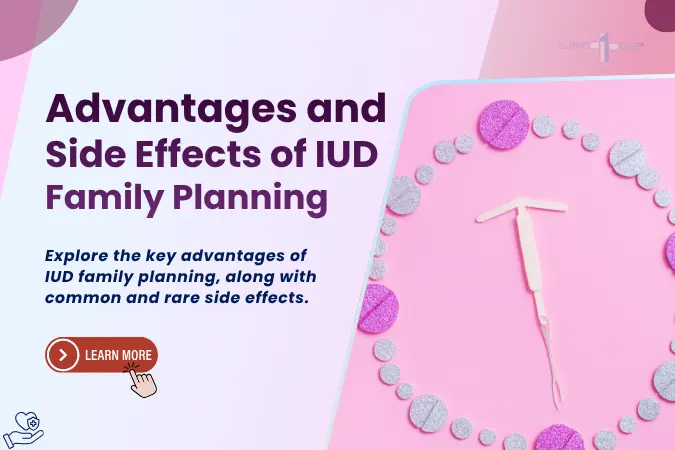
Many of you may already be familiar with IUDs. For those who are not, an intrauterine device (IUD) is a small T-shaped device placed inside the uterus to prevent pregnancy. IUDs are among the most effective long-term family planning methods, offering more than 99% protection against pregnancy and long-lasting contraception without the need for daily attention.
They are also reversible, allowing fertility to return quickly after removal. However, like any birth control method, IUDs can cause side effects such as cramping, irregular bleeding, and changes in menstrual patterns, especially during the first few months after insertion.
Advantages of IUD Family Planning
IUDs provide highly effective pregnancy prevention, long-term protection, and reversible contraception, allowing fertility to return after removal. These advantages make IUDs a popular choice for individuals seeking a reliable method of family planning.
Additional benefits of using it include:
- No daily maintenance or reminders required
- Cost-effective over the long term
- Suitable for many people during breastfeeding
Highly Effective Pregnancy Prevention
One of the biggest advantages of IUD family planning is its high effectiveness. Both hormonal and copper IUDs are more than 99% effective at preventing pregnancy when correctly placed.
Once inserted, the device provides continuous protection without requiring daily action from the user. This high effectiveness makes IUDs one of the most reliable reversible contraceptive methods available.
Long-Lasting Protection
IUDs provide long-term contraception, making them a convenient option for people who want extended pregnancy prevention. Depending on the type (hormonal or non-hormonal), these family planning methods can remain effective for several years.
This long duration reduces the need for frequent clinic visits, prescription refills, or repeated contraceptive use. As a result, many people choose IUDs for their convenience and reliability.
Reversible Contraception
Another important advantage of IUDs is that they are fully reversible. A healthcare provider can remove the device at any time, and fertility usually returns quickly after removal. This makes IUDs suitable for individuals who may want children in the future.
For example, someone who wishes to delay pregnancy until completing higher education or achieving financial stability can use an IUD now and plan for pregnancy later.
Low-Maintenance Birth Control
Unlike birth control pills that require daily use, IUDs need very little ongoing attention after insertion.
Users do not need to remember a daily schedule or take regular action to maintain contraceptive protection. This feature can be particularly helpful for individuals with busy lifestyles or those who prefer a “set it and forget it” contraceptive option.
Cost-Effective Over Time
Although the initial cost of an IUD may be higher than that of some other contraceptive methods, it can be cost-effective in the long run. Because IUDs protect for several years, users avoid the ongoing expenses associated with monthly contraceptive supplies. Over time, this long-lasting protection may reduce overall contraceptive costs.
Suitable During Breastfeeding
Many IUDs can be safely used during breastfeeding, although suitability depends on individual health factors and medical advice.
Since some IUDs do not contain estrogen, they generally do not interfere with breast milk production. This makes IUDs a family planning option that healthcare providers may consider for many breastfeeding individuals after childbirth.
Additional Benefits of Intrauterine Contraceptive Devices
In addition to preventing pregnancy, these provide flexibility because they are available in both hormonal and non-hormonal(Copper T) forms. As a result, individuals can choose an option that best matches their health needs, lifestyle, and personal preferences.
Furthermore, hormonal IUDs may offer menstrual benefits. For instance, some users experience lighter and shorter periods, while others notice less menstrual pain and cramping over time.
Another important advantage is privacy. Since this birth control works inside the uterus, it remains discreet; no one else needs to know that a person is using contraception.
Finally, certain copper IUDs can also serve as emergency contraception if inserted within a specific period after unprotected intercourse.
“Note: Due to anatomical differences (differences in the body’s structure and physical characteristics), the effects and experiences can vary from person to person.”
Common Side Effects of IUDs
Experiencing side effects such as cramping after insertion and irregular bleeding or spotting
after getting an IUD is common, especially during the first few weeks or months after insertion. In most cases, these side effects are mild and improve over time. However, experiences vary among individuals, so some people may notice more symptoms than others.
Other common side effects of IUDs include:
- Headaches and mood changes
- Mild pelvic discomfort
Cramping After Insertion
Mild to moderate cramping is common immediately after an IUD is inserted. Many people experience cramps for a few hours or days following the procedure. Fortunately, the discomfort usually becomes less frequent and less intense over time.
However, the severity of cramping varies from person to person. While some individuals experience only mild discomfort, others may notice stronger cramps during the first few weeks after insertion. If the pain becomes severe or does not improve, it is important to consult a healthcare provider.
Headaches and Mood Changes
Some people using hormonal IUDs may experience headaches, mood changes, or mild emotional symptoms. These side effects are generally temporary and may improve within the first few months of use.
However, not everyone experiences these symptoms. Since individual responses vary, some users may notice no changes at all, while others may experience more noticeable effects. If symptoms persist or significantly affect daily life, seeking medical advice is recommended.
Mild Pelvic Discomfort
Some individuals may experience mild pelvic discomfort or a feeling of pressure after IUD insertion. In most cases, this sensation is temporary and resolves within a few days or weeks.
Nevertheless, persistent or severe pelvic pain should not be ignored, as it could indicate an underlying problem that requires medical evaluation. Regular follow-up with a healthcare provider can help ensure that the IUD remains properly positioned.
Irregular Bleeding/Changes in Menstrual Flow
Irregular bleeding or spotting is common during the first few months after IUD insertion. During this time, users may notice unexpected bleeding between periods or changes in their usual menstrual pattern.
The type of IUD can influence these changes. Hormonal IUDs often make menstruation lighter and shorter over time, and, in some cases, periods may stop altogether after several months of use. In contrast, copper IUDs may initially cause heavier or longer menstrual flow, particularly during the first few menstrual cycles. Fortunately, menstrual patterns often stabilise with time.
“Important Note: Experiences vary among individuals, and some users may notice more significant changes than others. If bleeding becomes unusually heavy or persists for an extended period, it is advisable to consult a doctor.”
Less Common Risks Associated with IUDs
As with any medical procedure or device, there are certain risks associated with IUDs. Although these complications are rare, PID (Pelvic Inflammatory Disease), IUD expulsion, uterine perforation, and high-risk pregnancy may occasionally occur.
Pelvic infection
An IUD slightly increases the risk of a pelvic infection called Pelvic Inflammatory Disease, mainly during the first 2-3 weeks after insertion. After that, the risk is very low and similar to that of people without an IUD. In most cases, this is linked to an existing untreated STI rather than the IUD itself.
Your doctor will thoroughly assess your condition before placement to minimise this risk.
IUD Expulsion
IUD expulsion occurs when the device partially or completely slips out of the uterus. This is more likely to happen during the first few months after insertion. If the IUD moves out of its correct position, it may not provide effective pregnancy protection, increasing the risk of unintended pregnancy.
Because expulsion can sometimes occur without noticeable symptoms, checking the IUD strings and attending follow-up appointments can help detect this problem early.
Uterine Perforation
Uterine perforation is a rare complication in which the IUD passes through or creates a hole in the wall of the uterus during insertion. Although this complication is uncommon, it requires medical attention without delay.
When perforation occurs, the IUD may no longer remain in the correct position and, therefore, may not effectively prevent pregnancy. In most cases, additional medical treatment or removal of the device is necessary.
Pregnancy with an IUD in Place
Although IUDs are more than 99% effective, pregnancy can still occur in rare cases. If pregnancy happens while an IUD is in place, the device has failed to provide complete contraceptive protection.
Anyone who suspects pregnancy while using an IUD should contact a healthcare provider as soon as possible. Early evaluation is important to confirm the pregnancy and determine the most appropriate management.
Conclusion
IUDs offer several advantages, including highly effective pregnancy prevention, long-lasting protection, and the flexibility to plan future pregnancies.
However, like any contraceptive method, they can also cause side effects such as cramping, irregular bleeding, and changes in menstrual patterns. Although serious complications are uncommon, in rare cases, complications such as IUD expulsion or uterine perforation may occur.
Ultimately, no two people experience an IUD in the same way. While some individuals experience minimal side effects, others may notice more significant changes. Therefore, individual experiences with IUDs can vary depending on factors such as the type of IUD used and the person’s overall health.
Frequently Asked Questions
How effective is an IUD at preventing pregnancy?
The main advantages of IUD family planning include being highly effective(more than 99% effective), providing long-term protection against pregnancy, not requiring daily attention, and being removable whenever a person wants to become pregnant. Additionally, they require little daily maintenance, making them a convenient family planning option.
How long does an IUD last?
The length of protection depends on the type of IUD. Hormonal IUDs can prevent pregnancy for about 3 to 8 years, while copper IUDs can last for 10 years or even longer. Your healthcare provider can tell you how long your specific IUD will remain effective.
Can you get pregnant after my IUD is removed?
Yes. Most people can become pregnant soon after an IUD is removed because fertility usually returns quickly. However, the time it takes to become pregnant can vary from person to person.
What are the most common side effects of an IUD?
Common side effects include cramping, spotting, and changes in menstrual bleeding during the first few months after insertion. These side effects often improve as the body adjusts, although experiences vary.
Can an IUD make periods lighter?
Yes, IUDs, especially hormonal ones, can make periods lighter, shorter, and less painful over time. Some people may even stop having periods altogether while using a hormonal IUD. However, experiences differ from person to person.
![Best Nephrologist in Kathmandu, Nepal | Dr Diwakar Manandhar [NMC No. 12395]](https://clinicone.com.np/wp-content/uploads/2026/08/Best-nephrologist-in-kathmandu.webp "Best Nephrologist in Kathmandu, Nepal | Dr Diwakar Manandhar [NMC No. 12395]")