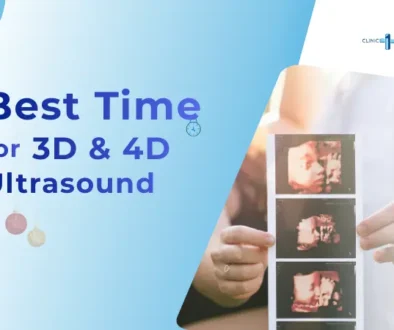
2D vs 3D vs 4D ultrasound : What’s the Difference

Last updated on January 18th, 2026 at 10:17 am
When your doctor suggests an ultrasound, you may hear terms like 2D, 3D, or 4D. They may sound technical and different, but the idea is simple: all of them use high-frequency sound waves to create pictures from inside your body.
The main difference is how those pictures look: flat, detailed, or moving. People usually choose a 3D or 4D ultrasound when they want clearer baby images or to see live movement during pregnancy.
Get the clarity you need with the ultrasound that fits your case
Don’t guess about your health or your baby. Book the right ultrasound and get clear answers today.
Let’s understand the difference between these 2D, 3D, and 4D ultrasounds step by step, most easily.
Difference 1: Real-Time Imaging
2D Ultrasound: This is the basic and most common type. It shows flat, black-and-white images in real time. Doctors see shapes and outlines but not depth.
3D Ultrasound: This method captures images in “slices.” They are then combined to form a three-dimensional picture that gives us valuable information.
4D Ultrasound: These ultrasounds incorporate time as an element, allowing for the creation of live video footage of your baby’s movements. This is a main difference between a 4D and a 3D ultrasound.
Difference 2: How the Image Looks
2D Ultrasound: Looks like a flat shadow image. You see lines, shapes, and outlines.
3D Ultrasound: Looks more real and lifelike. You can see curves, face shape, and body form.
4D Ultrasound: Looks like a moving video. You can watch actions like smiling, stretching, or yawning.
Difference 3: Medical Use
2D Ultrasound: Used for most medical checks, pregnancy growth, abdomen, pelvis, and organ exams.
3D Ultrasound: Used when doctors need more shape detail, like face or body structure.
4D Ultrasound: Used when movement matters, such as checking how parts move or watching baby actions.
Difference 4: Emotional Experience
2D Ultrasound: Mostly medical. It helps doctors more than emotional bonding.
3D Ultrasound: Parents feel more connected because they can see clearer facial features.
4D Ultrasound: Strong emotional impact. Parents can see live movements and expressions.
Difference 5: Cost and Availability
2D Ultrasound: Most affordable and widely available.
3D Ultrasound: Costs more than 2D and may not be available everywhere.
4D Ultrasound: Usually expensive than other ultrasounds and is available only in advanced centres.
Quick Comparison Table Between 2D, 3D, and 4D Ultrasound
| Feature | 2D Ultrasound | 3D Ultrasound | 4D Ultrasound |
|---|---|---|---|
| Image Type | Flat, black-and-white | Still 3D image | Moving 3D video |
| Depth | No depth | Has depth | Has depth |
| Movement | Real-time but flat | Still image | Live movement |
| Emotional Value | Low | Medium | High |
| Cost | Lowest | Medium | Highest |
| Common Use | Medical diagnostics | Detailed views | Live baby viewing |
Key Takeaways
- A 2D ultrasound is best for regular medical exams and pregnancy checks
- 3D ultrasound is helpful when doctors need clearer shape details
- 4D ultrasound is useful to see live movements and bonding moments
- Doctors usually decide which type you need
- More advanced does not always mean more necessary. Even with the rise of newer technologies, 2D remains the gold standard for medical diagnostics
Book Your Ultrasound at Clinic One
No matter which scan you need, Clinic One delivers the right ultrasound for you. We check your baby’s growth, find the cause of pain, and confirm health concerns using the scan that fits your case.
From simple 2D scans to advanced 3D and 4D scans, ultrasound at Clinic One gives you clear answers without delay at an affordable price. We use safe technology, explain results clearly, and guide you with confidence from start to finish.
Book today and get the right scan, done the right way.
Conclusion
2D, 3D, and 4D ultrasounds all use sound waves to look inside your body safely. The difference is not about bigger or worse: it’s about how much detail and movement you need.
2D is simple and powerful.
3D adds depth and shape.
4D adds life and motion.
Your doctor will always choose what helps you the most
Frequently Asked Questions
Is a 3D or 4D ultrasound better?
There is no single “better” option for everyone. A 3D ultrasound is best when you want a clear still image with shape and depth. A 4D ultrasound is better if you want to see live movement, such as your baby stretching, smiling, or moving hands.
Doctors usually choose based on what they need to check. Sometimes 3D is enough, and sometimes 4D gives more useful information. It always depends on your situation, not just the technology.
Are 3D and 4D the same?
No, they are not the same. A 3D ultrasound gives a still three-dimensional picture. It shows shape and depth but does not move. A 4D ultrasound is a 3D image in real time. That means you see the same kind of 3D picture, but it moves like a video.
What week is a 4D ultrasound done?
Most people do a 4D ultrasound between 26 and 32 weeks of pregnancy. At this time, the baby has developed clear facial features. There is also enough movement to see actions like yawning, stretching, or smiling, which makes the scan more meaningful.
What is the best time to have a 3D/4D ultrasound?
The best time is usually between 26 and 32 weeks of pregnancy. The baby is big enough to show clear details. There is still enough space inside the womb for movement, which helps both 3D and 4D images look better.
Is a growth scan 2D or 3D?
A growth scan is mostly done using a 2D ultrasound. It gives clear and accurate measurements of the baby’s size and development. Doctors trust 2D too for medical numbers like weight, head size, and length, even when 3D or 4D is available.