
How to Remove Warts at Home? Know What Works and What to Avoid
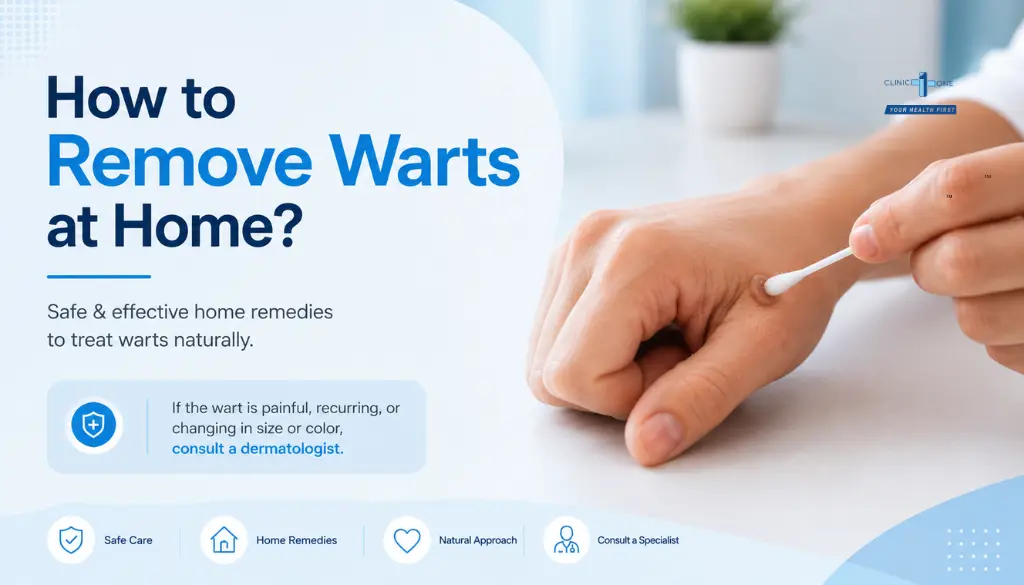
Many common warts, such as common warts, plantar warts, and some flat warts, can be treated at home using over-the-counter products like salicylic acid or home freezing kits. These treatments gradually remove the infected skin and are most effective when used consistently over several weeks.
However, not every wart is suitable for self-treatment. Warts on the face, genitals, or those that become painful, bleed, or show signs of infection should be assessed by a healthcare professional. Before starting any home treatment, it’s important to understand which types of warts are suitable for self-care and which require medical evaluation.
What Are Warts?
A wart is a small, noncancerous skin growth caused by certain types of the human papillomavirus (HPV). The virus enters the body through tiny cuts or abrasions, causing skin cells to multiply rapidly and form a rough, raised bump.
These growths can appear on various parts of the body, including the hands, feet, face, and around the nails. The infection spreads through direct skin-to-skin contact or by touching contaminated surfaces, such as shared towels, razors, or floors in public showers and swimming pools.
Although anyone can develop them, children, teenagers, and people with weakened immune systems are more likely to be affected.
Can All Warts Be Removed at Home?
No. While many common skin warts respond well to over-the-counter treatments, some types should be assessed by a healthcare professional due to their location or the need for specialised care.
| Type of Wart | Can It Be Treated at Home? |
|---|---|
| Common warts | Yes. Usually respond well to salicylic acid or home freezing kits. |
| Plantar warts | Yes. Many can be treated at home, although larger or painful ones may require medical treatment. |
| Flat warts | Sometimes. Small patches may respond to home treatment, but a doctor should evaluate multiple or facial flat warts. |
| Filiform warts | Usually not recommended. These often develop around the eyes, nose, or mouth, where self-treatment can damage healthy skin. |
| Genital warts | No. Sexually transmitted HPV causes these and should always be diagnosed and treated by a healthcare professional. |
Knowing which type of wart you have is a must before starting home treatment. Once you’ve identified its type, the next step is choosing a method that is both safe and supported by medical evidence.
Need Expert Wart Removal?
Home treatment doesn’t work for every wart. If your wart is painful, keeps coming back, or isn’t improving, get expert care at Clinic One. We offer precise diagnosis, wart removal treatments, and HPV vaccination, all under one roof.
Best Ways to Remove Warts at Home
The most effective at-home treatments for common warts are salicylic acid and home freezing kits (cryotherapy). Both are available over the counter and have been shown to remove many common and plantar warts when used correctly and consistently.
Salicylic Acid
Salicylic acid is considered the first-line treatment for many common warts. It works by gradually softening and removing the infected layers of skin while allowing healthy skin to replace them over time. This treatment is available in different forms, including liquids, gels, pads, and medicated plasters.
Most people need to apply it once daily for several weeks to achieve the best results. Following the product instructions and continuing treatment as directed is important, even if the wart begins to shrink.
Home Freezing Kits
Home freezing kits use a cold agent to freeze the wart, causing the affected tissue to gradually die and fall away. Although these kits are not as cold or as powerful as the liquid nitrogen used in medical clinics, they can be effective for smaller common and plantar warts.
Depending on the product, more than one treatment may be needed. Always follow the manufacturer’s instructions and avoid applying the freezing agent to healthy skin surrounding the wart.
Step-by-Step Guide to Follow
Like any treatment, you need to use over-the-counter wart removers correctly to achieve the best results and minimise irritation to the surrounding healthy skin. The following steps provide a general guide for treating common warts at home, although individual products may include additional instructions or precautions.
- Wash the area with soap and water, then dry it thoroughly.
- Soak the wart in warm water for 10–15 minutes to soften the hardened skin.
- Gently remove loose dead skin using an emery board, pumice stone, or disposable nail file. Use it only for the affected area to avoid spreading the virus.
- Apply the treatment according to the product instructions. Make sure it covers only the wart and not the surrounding healthy skin.
- Repeat the treatment consistently for the recommended duration. Avoid skipping applications, as regular use is important for successful removal.
- Monitor the area for improvement. Stop treatment and seek medical advice if you develop severe pain, excessive redness, swelling, pus, or bleeding.
How Long Does Wart Removal Take?
Completely removing a wart takes time and may require several weeks to a few months. The exact duration depends on the type of wart, the treatment method, its size and location, and how consistently you follow the treatment plan.
The table below provides a general idea of how long different treatment options may take to show results.
| Treatment Method | Typical Time to See Results |
|---|---|
| Salicylic acid | Usually 6 - 12 weeks with daily application |
| Home freezing kits | Often requires multiple treatments over several weeks |
| Natural remedies | Results are unpredictable and lack strong scientific evidence |
Some skin growths disappear sooner than others, while stubborn or larger warts may take longer to clear. Even after successful treatment, new warts can develop because HPV may remain in the surrounding skin.
Why Isn’t My Wart Going Away?
Some warts respond quickly to treatment, while others take longer or prove more difficult to remove. If you do not notice improvement after several weeks, one or more of the following factors may be responsible:
- You stopped treatment too soon: Most over-the-counter wart treatments require consistent use for several weeks before noticeable improvement occurs.
- The treatment wasn’t applied regularly: Skipping applications can reduce the effectiveness of treatments such as salicylic acid.
- The wart is large or deeply rooted: Larger or older growths often require more time or professional treatment.
- The growth may not be a wart: Corns, calluses, skin tags, and some other skin conditions can resemble warts but require different treatment.
- Your immune system hasn’t cleared the virus: HPV can persist in the skin, making some warts more resistant to treatment.
If the wart continues to grow, becomes painful, or shows no improvement after completing the recommended treatment, consult a healthcare professional for further evaluation.
Common Home Remedies for Warts
Besides over-the-counter treatments, many people try home remedies to remove warts. While these methods are widely shared online and through personal experience, most have limited scientific evidence to support their effectiveness, and results can vary from person to person.
Some of the most commonly used home remedies include:
- Apple cider vinegar: Believed to break down wart tissue because of its acidic nature, although scientific evidence remains limited.
- Duct tape: Thought to gradually loosen the wart or stimulate an immune response by covering the affected area.
- Garlic: Contains compounds with antiviral properties that some people believe may help shrink warts.
- Tea tree oil: Used for its antimicrobial and anti-inflammatory properties, but there is little evidence that it effectively removes warts.
- Banana peel: Some people believe natural enzymes or antioxidants in the peel help soften or reduce warts, although research does not support this claim.
- Toothpaste: Commonly claimed to dry out warts, but there is no scientific evidence that it is an effective treatment.
These remedies have not been proven to work as reliably as salicylic acid or home freezing kits. If you decide to try a natural remedy, avoid anything that burns, cuts, or severely irritates the skin, as this may increase the risk of injury or infection.
What to Avoid When Treating Warts at Home?
Although many common warts can be treated safely at home, some practices can do more harm than good. Avoid the following:
- Cutting or picking the wart: This can cause bleeding, increase the risk of infection, and spread HPV to nearby skin.
- Using sharp objects: Attempting to shave or cut off a wart at home can damage healthy tissue and lead to scarring.
- Applying harsh chemicals: Household products such as bleach or other corrosive substances can cause chemical burns and should never be used on the skin.
- Sharing personal items: Avoid sharing towels, razors, nail clippers, pumice stones, or emery boards used on the wart, as they may spread the virus.
- Ignoring signs of infection: Stop home treatment and seek medical advice if you notice increasing pain, swelling, pus, persistent bleeding, or redness spreading beyond the wart.
How to Prevent Warts from Coming Back
Even after successful treatment, warts can return because the human papillomavirus (HPV) may remain in the skin. Although no method can completely prevent recurrence, these measures can help reduce the risk:
- Complete the full course of treatment, even if the wart appears to have disappeared.
- Replace or disinfect items that come into direct contact with the wart, such as nail files, pumice stones, or emery boards.
- Wear footwear in public showers, locker rooms, and swimming pool areas, especially if you are prone to plantar warts.
- Protect your skin by keeping cuts and abrasions clean and covered until they heal, as HPV can enter through broken skin.
- Maintain a healthy immune system with adequate sleep, regular physical activity, and a balanced diet.
- Stay up to date with HPV vaccination if you are eligible. The HPV vaccine helps protect against the HPV types responsible for most genital warts and several HPV-related cancers. Although it does not prevent or treat all types of warts, vaccination remains an important step in reducing the risk of HPV infection.
While these measures cannot guarantee that warts will not return, they can help reduce recurrence and lower the risk of spreading HPV to others.
When Is Home Treatment Not Recommended?
Although many common warts can be treated safely at home, self-treatment is not suitable for every situation. Home wart removal is generally not recommended if:
- The wart is on your face, around the eyes, or in the genital area. These areas are more sensitive and require professional evaluation and treatment.
- You have diabetes, poor circulation, or a weakened immune system. Home treatments may increase the risk of complications or delayed healing.
- The wart is painful, bleeding, or shows signs of infection, such as increasing redness, swelling, or pus.
- You are unsure whether the growth is actually a wart. Some skin conditions, including moles, skin tags, corns, and certain skin cancers, can resemble warts.
- The wart is very large, continues to grow, or multiple warts appear at the same time.
- Previous home treatment has not worked despite following the product instructions for the recommended duration.
If any of these situations apply to you, consult a healthcare professional instead of attempting further treatment at home. An accurate diagnosis helps ensure you receive the safest and most appropriate treatment for your condition.
Conclusion
Before starting home treatment, identify the type of wart you have and make sure it is suitable for self-care. Seek medical advice instead of treating the wart yourself if it develops on your face, around your eyes, or in the genital area.
You can remove many common warts at home with evidence-based treatments such as salicylic acid or home freezing kits. Follow the product instructions, use the treatment consistently, and allow enough time for it to work. If home treatment is not suitable or your wart does not improve, seek professional medical care.
At Clinic One, our dermatologists and healthcare professionals provide comprehensive wart evaluation, removal, and treatment for all types of warts. We also offer HPV vaccination, helping protect against the HPV types responsible for most genital warts and several HPV-related cancers.
Contact Clinic One to discuss the most appropriate treatment for your condition.
Frequently Asked Questions
What is the fastest way to get rid of a wart?
The fastest way to remove a wart depends on the type of wart, its size, location, and how long it has been present. After identifying the wart, a healthcare professional can recommend the most appropriate treatment, which may include cryotherapy, electrocautery, laser treatment, or minor surgical removal.
For warts that are suitable for self-treatment, over-the-counter options such as salicylic acid or home freezing kits are effective, although they usually require several weeks of consistent use.
Can warts go away on their own?
Yes. Many warts disappear without treatment as your immune system gradually fights the HPV infection. However, this process may take several months or even years.
Is it safe to cut or pick off a wart?
No. Cutting or picking a wart can cause bleeding, increase the risk of infection, and spread HPV to nearby skin. Use evidence-based treatments instead of attempting to remove the wart yourself.
When should I see a doctor for a wart?
Seek medical advice if the wart develops on your face, around your eyes, or in the genital area, becomes painful or infected, continues to grow, or does not improve after completing the recommended home treatment.
Does apple cider vinegar remove warts?
Some people use apple cider vinegar as a home remedy because its acidity is thought to break down wart tissue. However, scientific evidence supporting its effectiveness is limited, and it may irritate or burn healthy skin.
Does duct tape work for warts?
Some studies suggest duct tape may help by irritating the skin and stimulating an immune response, but research has produced mixed results. It has not been shown to work as consistently as salicylic acid or home freezing kits.
Can plantar warts be treated at home?
Yes. Many plantar warts respond well to salicylic acid or home freezing kits. However, you should seek medical advice if the wart is very painful, large, persists despite treatment, or if you have diabetes or poor circulation.
How do I know if it’s really a wart?
Warts are usually rough, raised skin growths that may contain tiny black dots caused by small clotted blood vessels. However, corns, calluses, skin tags, and some other skin conditions can look similar. If you’re unsure, consult a healthcare professional before starting treatment.
How can I remove a wart at home safely?
You can safely remove many common and plantar warts at home using over-the-counter treatments such as salicylic acid or home freezing kits. Follow the product instructions carefully, apply the treatment consistently, and avoid cutting or picking the wart.

![Best Cardioloigist in Kathmandu, Nepal | Dr. Dipak Raj Baral [NMC No. 5626]](https://clinicone.com.np/wp-content/uploads/2026/09/Best-cardiologist-in-kathmandu-Nepal.webp "Best Cardioloigist in Kathmandu, Nepal | Dr. Dipak Raj Baral [NMC No. 5626]")