Snoring: Why People Snore, Its Causes, Facts vs Myths, and Solutions
Last updated on December 8th, 2025 at 02:40 pm
Introduction
You’ve probably heard that deep, vibrating sound that fills the room at night. Sometimes it’s your partner, sometimes it’s you. Snoring might seem harmless or even funny at first, but when it starts disrupting sleep or leaves you tired in the morning, it’s no longer just a noise. It’s your body’s way of saying something isn’t quite right with your breathing while you sleep.
Snoring occurs when airflow through the nose or throat becomes partially blocked, causing the tissues to vibrate and create that familiar sound. Sometimes it’s soft and occasional, other times it’s loud enough to disturb others. So today, let’s dive deeper and learn the causes of snoring, whether it’s normal and understand why people snore. We’ll also bust some myths around these topics and later talk about solutions for snoring.
Understand the reasons behind your snoring and its health impact. Clinic One in Kathmandu provides expert evaluation by ENT and sleep specialists.
Snoring Meaning
Snoring or घुर्ने in Nepali is the harsh or rattling sound that happens when air struggles to pass freely through your nose and throat while you sleep. The sound can range from a soft hum to a loud, vibrating noise that shakes the entire room, often noticed more by partners than the person snoring. Simply put, snoring is the sound of airflow fighting resistance inside your upper airway: the narrower the passage, the louder the snore.
Types of Snoring
Snoring doesn’t sound the same for everyone. The kind of sound often hints at what’s happening in your airways, as mentioned below:
- Nasal snoring: A light, whistling sound that happens when your nose is blocked, often due to a cold or a bent nasal bone (deviated septum).
- Throat snoring: A deep, rough sound made when the muscles in your throat relax too much during sleep.
- Tongue-based snoring: A choking or gurgling sound caused when your tongue falls back and partly blocks your throat.
- Palatal snoring: A fluttering sound made when the soft part of the roof of your mouth (palate) and the small tissue hanging at the back (uvula) vibrate as you breathe.
- Mixed snoring: A mix of nasal and throat sounds, usually loud and uneven, seen in people with blocked airways or obstructive sleep apnea syndrome (OSAS) (a sleep disorder that briefly stops breathing).
While occasional snoring is common, especially after a long day or due to nasal blockage, frequent loud snoring may indicate an underlying issue like airway obstruction or poor sleep posture. Each type reflects a different underlying cause, from nasal congestion to weak throat muscles, and helps doctors identify whether the snoring is mild or linked to some serious health conditions.
In a study, 20 male patients with obstructive sleep apnea syndrome (OSAS) underwent a 6-hour overnight polysomnography with continuous snoring sound recording. The same study found and identified four distinct snore types based on frequency patterns:
- Type 1: monosyllabic low-frequency snore,
- Type 2: duplex low- and mid-frequency snore,
- Type 3: duplex low- and high-frequency snore, and
- Type 4: triplex low-, mid-, and high-frequency snore.
Is Snoring Normal?
Occasional, light snoring is common and usually harmless, especially after a tiring day, alcohol intake, or nasal blockage from a cold. However, frequent or loud snoring is not normal. It’s often a warning sign that your breathing is being interrupted while you sleep.
When snoring happens almost every night, it may point to deeper problems such as sleep apnea (a condition where breathing repeatedly stops and starts during sleep), nasal obstruction, or obesity-related airway narrowing. These issues not only disturb sleep but also increase the risk of high blood pressure, cardiovascular disease, and daytime fatigue.
In short, while mild snoring might just be an occasional nuisance, regular or loud snoring should never be ignored.
Why Do People Snore?
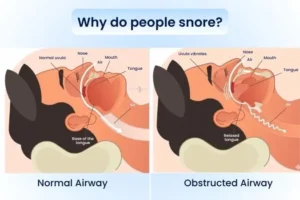
Snoring happens when air struggles to move smoothly through the airway while you sleep. As you relax, the muscles in your throat, tongue, and soft palate (the soft part at the back of your mouth) loosen. When these tissues relax too much, they partially block the airway. As air squeezes through the narrowed passage, it makes the surrounding tissues vibrate, producing the familiar snoring sound.
Snoring Causes
Snoring doesn’t just happen by chance; it’s usually a result of underlying conditions that affect how air flows through your nose and throat. Let’s look at the most common causes and how each one contributes:
- Nasal Congestion or Blockage: When your nose is blocked due to allergies, sinus infection, or a deviated septum (a bend in the wall inside your nose), air struggles to pass freely. This creates vibration in your throat and nose, leading to snoring.
- Obesity or Excess Weight: Fat deposits around the neck and throat narrow the airway. This makes breathing harder and increases the chance of vibration during sleep.
- Sleep Position: Lying on your back allows gravity to pull the tongue and soft palate backward, blocking airflow and triggering snoring.
- Alcohol and Sedatives: These relax the throat muscles more than usual, which can cause the airway to collapse partially during sleep.
- Age and Muscle Tone: As people age, throat muscles lose strength, making them more likely to collapse and vibrate.
- Enlarged Tonsils or Adenoids: Especially in children, these can block the airway and cause heavy snoring.
- Sleep Apnea: A serious condition where breathing repeatedly stops and starts during sleep. It’s often linked with loud snoring, daytime tiredness, and even heart risks.
Snoring in Adults
Snoring in adults is one of the most common yet underestimated sleep problems. Many people laugh it off, but in reality, persistent or loud snoring can be a sign of a health concern rather than just a sleeping habit.
In adults, snoring usually develops due to lifestyle and physical factors, such as weight gain (due to a narrow airway), nasal congestion from allergies or chronic sinus issues, alcohol or smoking, which relaxes throat muscles and irritates airways or a poor sleep posture, especially sleeping on the back.
Approximately 40% of adult men and 24% of adult women regularly snore. Men are more likely to snore than women due to differences in airway anatomy, but hormonal changes during menopause can increase snoring in women, too.
It’s important to remember that adult snoring isn’t just a personal issue; it affects your partner’s sleep and daily energy as well. In some cases, it may indicate sleep apnea, which requires medical attention.
Snoring in Children
Snoring in children often surprises parents, but it’s not as rare as it seems. While an occasional soft snore during deep sleep is normal, frequent or loud snoring can signal an underlying issue that needs attention.
Likewise, in adults, common causes of snoring in children can also be due to enlarged tonsils or adenoids (soft tissues at the back of the throat and nose) that partially block airflow, nasal allergies or chronic sinus infections that make breathing harder, or Obesity, which can narrow the airway. Sleep position or poor sleep hygiene can also be a snoring factor in children, too.
Unlike adults, children’s snoring should never be ignored for long. It can affect growth, concentration, mood, and school performance due to poor-quality sleep. In some cases, it’s linked to sleep apnea, where breathing briefly stops during sleep. If your child snores most nights or breathes noisily while asleep, it’s a good idea to consult an ENT doctor or sleep specialist (pulmonologist).
To identify whether your child has sleep apnea or not, you can check our sleep apnea quiz for children.
Snoring Facts vs Myths
There’s a lot of confusion about snoring. Separating fact from fiction helps people understand when snoring is harmless and when it needs attention.
Common Snoring Myths and Facts:
| Myth | Fact |
|---|---|
| Snoring only happens to men | Women can snore too, especially after menopause or due to hormonal changes |
| Snoring is always harmless | Frequent loud snoring can signal sleep apnea or other airway problems, increasing risks for heart issues and poor sleep quality |
| Only overweight people snore | While obesity increases risk, snoring can affect anyone with nasal congestion, weak throat muscles, or certain anatomical differences |
| Sleeping on your side completely stops snoring | Side-sleeping may reduce snoring, but it doesn’t solve snoring caused by airway obstruction or sleep apnea |
| Surgery is the only solution | Many snoring cases improve with lifestyle changes, medical devices, or treatment of nasal and throat conditions |
How to Stop Snoring?
Stopping snoring starts with understanding the underlying cause. So it’s better to take the doctor’s advice first. But, with that, you can try the following methods:
- Change Sleep Position: Sleeping on your side prevents the tongue and soft tissues from collapsing into the airway.
- Maintain a Healthy Weight: Reducing excess fat around the neck eases pressure on the airway.
- Avoid Alcohol or Sedatives Before Bed: These relax throat muscles, increasing the chance of snoring.
- Treat Nasal Congestion: Saline sprays, allergy treatments, or medical care for chronic nasal blockage can improve airflow.
- Use Anti-Snoring Devices: Mouthpieces or nasal strips help keep the airway open in some cases.
That said, it’s better to seek medical evaluation to find the root cause and stop it. You can take help from an ENT or sleep specialist if you have persistent loud snoring, choking, or gasping during sleep.
Conclusion
Snoring reflects how well air moves through your nose and throat during sleep. While occasional snoring may be harmless, frequent or loud snoring can indicate conditions like sleep apnea. Recognising the causes of snoring, the different types of snoring sounds, and separating myths from facts allows you to understand when medical attention is needed.
Adults and children with persistent snoring that affects sleep quality or daytime energy should consult an ENT or sleep specialist.
In Kathmandu, Nepal, Clinic One provides evaluations and treatments for snoring and related sleep issues, helping improve overall health and restful nights.
Frequently Asked Questions
How to stop a person from snoring?
Encourage side sleeping to prevent the tongue and throat tissues from blocking the airway. Treat nasal congestion with sprays or allergy care, and avoid alcohol before bed. If you or someone you know has persistent snoring, seek help from an ENT or sleep specialist.
What is the best treatment for snoring?
Treatment depends on the cause. Options include lifestyle changes, nasal treatments, anti-snoring devices, or medical procedures. A doctor can determine the most effective solution based on the type of snoring.
Is snoring good or bad?
Occasional snoring is generally harmless, but frequent or loud snoring may indicate sleep apnea or airway problems. It can affect sleep quality, energy levels, and heart health if left unchecked.