
Corn and Callus Treatment & Prevention
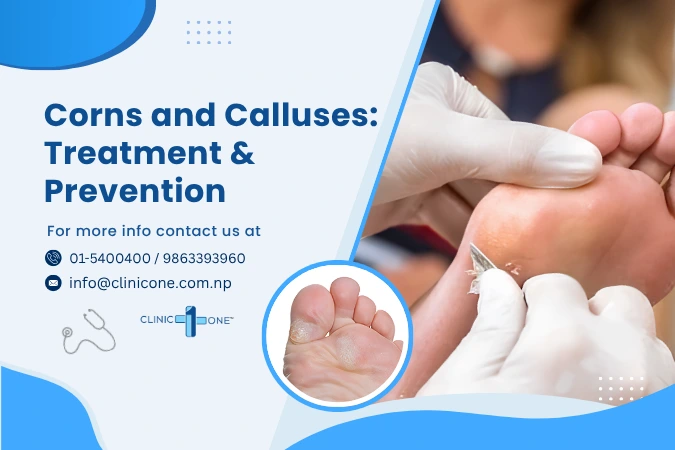
The right corn and callus treatment focuses on three things: reducing pressure, softening the skin, and preventing it from coming back. In most cases, simple care like soaking, gentle filing, and proper footwear helps. However, if the area becomes painful or keeps returning, you may need medical treatment.
Get Safe and Effective Corn and Callus Removal at Clinic One
How to Treat Corns and Calluses
The best way to treat corns and calluses is to identify their cause. In most cases, they develop due to repeated pressure or friction from footwear, walking patterns, or long hours of standing.
Once the cause is clear, treatment becomes more effective because you can reduce that pressure and prevent the problem from returning. Treatment usually focuses on softening the thick skin, gently reducing it, and correcting the pressure points.
Mild cases improve with simple care like soaking, filing, moisturising, and wearing well-fitted shoes. However, if the area is painful or keeps returning, you may need professional treatment to help remove the lesion and then address the underlying cause.
Step-by-Step Treatment Approach
While you follow the steps below, most mild cases improve without complications.
- Identify the cause: Check if tight shoes, long standing hours, or walking patterns are creating pressure
- Reduce pressure: Change footwear or use soft padding to relieve the affected area
- Soften the skin: Warm water soaking helps loosen thickened skin
- Gently reduce buildup: Light filing can help smooth the area over time
- Prevent recurrence: Fix the underlying pressure so the problem does not return
Corns and Calluses Treatment at Home
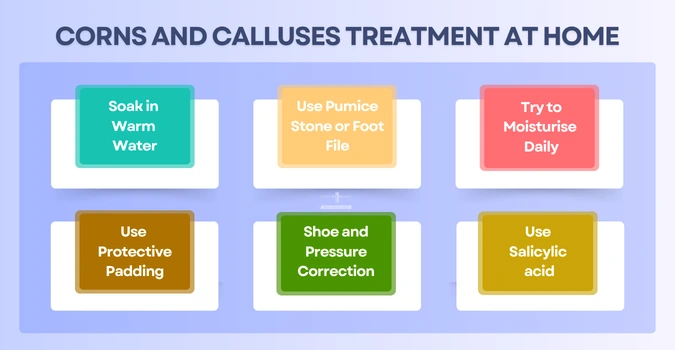
To treat corns and calluses at home, use DIY methods like soaking in warm water, then using foot files/pumice stones, moisturising daily, using protective padding or cushioning and salicylic acid.
Here’s how to manage those problems:
Soaking in Warm Water:
Soaking your feet in warm water works by hydrating the outer thickened layer (stratum corneum), which temporarily reduces hardness and makes the skin more pliable.
This is important because dry, compact skin resists treatment. However, soaking should be limited to about 10-15 minutes; longer exposure can break down healthy skin and worsen dryness.
Use a Pumice Stone or a Foot File
Using a pumice stone or foot file helps mechanically reduce excess keratin buildup. Corns and calluses form due to repeated pressure, so the skin responds by producing more keratin. Gentle filing removes only the outer dead layer.
The key here is control; don’t overdo it. Over-aggressive filing can trigger inflammation, expose inner skin, creating chances of infection or produce even more protective thick skin.
Moisturise Daily
Applying a moisturiser restores the skin barrier function and reduces transepidermal water loss, which keeps the skin flexible. This is clinically important because flexible skin distributes pressure better than dry, rigid skin.
Skipping moisturiser allows the skin to harden again quickly, especially in areas of constant friction like heels and toes.
Use Protective Padding or Cushioning
Using soft pads or cushioning redistributes pressure away from the focal point of irritation. This is crucial because corns form at exact pressure points, while calluses form over broader stress zones.
Without correcting pressure, any surface treatment will only give temporary relief. However, cushioning alone is insufficient if footwear continues to create abnormal pressure patterns.
Use Salicylic acid
Using salicylic acid-based products can also help in some cases. Salicylic acid works as a keratolytic agent, meaning it slowly breaks down the thickened dead skin layer. It is commonly used in medicated corn plasters or gels.
However, it should be used carefully because overuse can damage healthy skin around the lesion, especially in people with sensitive skin or diabetes.
Shoe and Pressure Correction
One of the most important parts of treatment is fixing where the pressure is coming from. This may include recommending better-fitting shoes, soft inner pads, or special insoles that spread pressure more evenly across the foot.
If walking style or foot shape is causing repeated stress, small changes in movement or simple exercises may also help reduce recurrence.
Need Proper Corn or Callus Treatment? Visit Clinic One for Safe Removal and Expert Care
Medical Treatment for Corns and Calluses
When corns or calluses become painful, keep coming back, or do not improve with home care, seek medical treatment.
Professional Skin Removal
A doctor or foot specialist carefully removes the thick, hard skin using safe, sterile tools. This quickly reduces pressure and relieves pain, especially when there is a hard “core” inside a corn. It gives immediate comfort, but if the cause (like tight shoes or pressure points) is not fixed, the problem can return.
Stronger Medicinal Creams
In some cases, doctors recommend stronger creams that help soften hard skin more effectively than regular moisturisers. These creams slowly break down thickened areas over time. If the skin around the area is sore or irritated, additional soothing medicines may be used to reduce discomfort.
Pressure Offloading with Orthotic Support
One of the most important parts of treatment is offloading pressure from the affected area. Custom insoles, toe separators, or cushioning devices help redistribute body weight more evenly across the foot.
This is particularly important in people with flat feet, high arches, toe deformities, or abnormal gait patterns. Without correcting pressure points, even completely removed corns tend to recur because the mechanical trigger remains unchanged.
Treatment for Bone-Related Causes
If corns repeatedly form due to bone deformities, surgical correction may be considered. It might include issues such as hammertoes (a bent toe or a bony bump). In such cases, simple skin treatment is not enough.
Procedures like osteotomy, arthroplasty, or tendon correction help realign the bone structure and reduce abnormal pressure points. This is usually reserved for cases where conservative treatment fails, and mechanical deformity is the main cause.
Removal for Long-Standing Cases
In resistant cases, direct surgical removal of the corn or callus may be performed. The surgeon removes the entire hardened tissue down to healthy skin to ensure complete clearance. If a deeper fibrotic core or associated bursa is present, it is also removed to reduce recurrence risk.
When combined with the correction of underlying deformities, recurrence rates are significantly lower. The procedure is typically done under local anesthesia, and most patients resume normal footwear within a few days.
In Case of Infection
If the corn or surrounding skin becomes infected, medical treatment includes appropriate antibiotics, either topical or oral, depending on severity. Infection is first properly assessed before treatment to ensure the correct medication is used and prevent complications.
Important for High-Risk Patients
People with diabetes, neuropathy, or poor circulation require special care. They should avoid self-treatment and over-the-counter removal methods because even minor skin injuries can lead to serious complications.
Any pain, skin change, or thickening in such patients should be evaluated early by a medical professional to prevent ulcers or infection.
How to Prevent Corn and Callus?
Preventing corns and calluses is mainly about reducing repeated pressure and friction on the skin. Once you control these two factors, the skin no longer needs to thicken as a protective response. To achieve this, you can wear proper footwear, do a daily footcare routine, and make some lifestyle adjustments.
Preventing corns and calluses is mainly about reducing repeated pressure and friction so the skin does not need to thicken as a protective response.
- Wear properly fitting shoes that do not squeeze toes or create rubbing points
- Avoid narrow or tight footwear that puts pressure on specific areas of the foot
- Use cushioned soles or insoles to spread pressure more evenly while walking or standing
- Replace old or worn-out shoes that no longer support proper weight distribution
- Avoid long periods of continuous standing or walking without short breaks
- Reduce repeated pressure on the same area of the foot during daily activities
- Avoid walking barefoot on hard surfaces for long durations
- Check for foot structure issues like flat feet or high arches that increase pressure points
When Should You See a Doctor?
You should see a doctor when a corn or callus stops responding to basic care or starts causing complications. Seek professional help if:
- You have diabetes, nerve problems, or poor blood circulation
- Pain becomes persistent or starts affecting walking or daily activities
- Thick skin keeps returning in the same area despite proper care
- The problem area becomes red, swollen, or shows signs of infection
- You can differentiate whether it is a corn, callus, or another skin problem
- The lesion changes in size, colour, or appearance
- Home care does not improve the condition over time
- There is cracking, bleeding, or an open sore in the area
Corn and Callus Treatment at Clinic One
At Clinic One, we focus on precise diagnosis and clinically safe management of corns and calluses using a structured, step-based approach.
- Confirm the exact condition through proper clinical examination to avoid misdiagnosis
- Perform safe removal of thickened skin using controlled, sterile techniques to relieve pressure and pain
- Identify the exact pressure points responsible for recurrence through targeted assessment
- Apply appropriate medical treatment based on severity, skin condition, and patient sensitivity
- Address high-risk cases (such as diabetes or nerve-related issues) with extra caution and modified care
- Provide corrective guidance to reduce pressure and minimise recurrence risk
Final Thoughts
Effective treatment of corns and calluses depends on two things: removing the lesion and correcting the pressure causing it. Use home care treatments like soaking, gentle filing, moisturising, and protective padding to soften and manage mild cases. If the lesion is persistent or painful, seek proper clinical treatment for safe removal and relief.
Clinic One can help treat corns and calluses. We provide accurate diagnosis to confirm the exact condition, safe removal of thickened skin to reduce pain, and targeted management of pressure points to prevent recurrence. Book Appointment Today
Frequently Asked Questions
What is the fastest way to cure corn?
The fastest way to relieve a corn is to remove pressure from the affected area and reduce the thickened skin safely. Cushioning the area, wearing proper footwear, and gentle skin softening can reduce pain quickly. For faster and more complete relief, professional removal is more effective than home methods.
How to remove a corn on your foot?
You can start by softening the skin with warm water, gently reducing hard skin, and protecting the area from pressure using padding or proper shoes. If the corn is painful or deep, a doctor can safely remove the thick core without damaging the surrounding skin.
What is the root cause of corns on the feet?
The main cause is repeated pressure or friction on a specific point of the foot. This usually happens due to tight shoes, abnormal walking patterns, long hours of standing, or foot shape issues that create uneven pressure distribution.
Does Salicylic acid work for foot corn?
Yes, salicylic acid can help by softening and breaking down thickened skin over time. It works slowly and is usually used in medicated plasters or creams. However, it must be used carefully because overuse can damage healthy skin, especially in sensitive individuals.

![Best Cardioloigist in Kathmandu, Nepal | Dr. Dipak Raj Baral [NMC No. 5626]](https://clinicone.com.np/wp-content/uploads/2026/09/Best-cardiologist-in-kathmandu-Nepal.webp "Best Cardioloigist in Kathmandu, Nepal | Dr. Dipak Raj Baral [NMC No. 5626]")