
Hantavirus Draws Global Attention After Recent Cruise Ship Incident
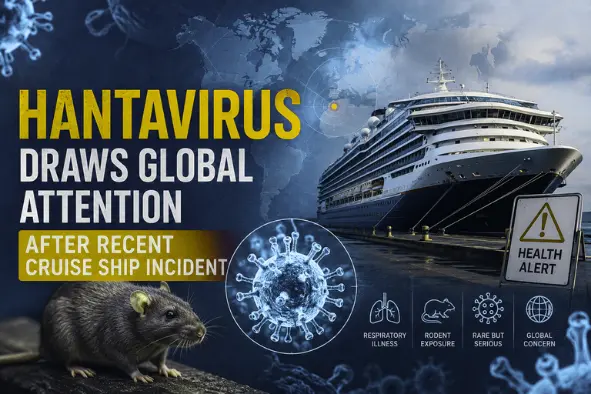
Health officials in several countries are closely watching a rare virus called hantavirus after recent cases linked to a cruise trip reportedly claimed several lives. According to WHO, as of May 8 2026, there are 8 reported cases of hantavirus-associated illness, of which 5 are confirmed, and 3 are suspected.
Officials and infectious disease experts are now investigating whether the cases may involve the Andes strain: a rare form of hantavirus known for its potential human-to-human transmission.
Although hantavirus is not a new disease, many people are hearing about it for the first time. Experts say the virus is still considered rare, but recent developments have increased public interest and raised questions about how it spreads, its symptoms, and how serious it can become, given that there is no cure.
According to reports from international health agencies and Reuters, monitoring efforts and contact tracing measures are currently underway as officials work to understand the scope of the situation better.
What Is Hantavirus?
Hantavirus refers to a group of viruses primarily carried by rodents such as rats and mice. Humans may become infected through exposure to infected rodent urine, saliva, or droppings, particularly in enclosed or poorly ventilated areas.
The virus can lead to two major illnesses, depending on the strain:
- Hantavirus Pulmonary Syndrome (HPS), which mainly affects the lungs
- Hemorrhagic Fever with Renal Syndrome (HFRS), which can affect the kidneys and blood vessels
According to the World Health Organisation (WHO), hantavirus infections are rare but can sometimes lead to serious health problems if not treated early. Health experts note that most hantavirus infections remain uncommon, but certain strains may lead to severe complications if not identified early.
Why Experts Are Paying Attention to the Current Situation?
What makes the recent incident particularly notable is the possible involvement of the Andes virus strain. Most types of hantavirus do not spread from person to person. However, the Andes strain is different because there have been rare cases where close human contact may have led to transmission.
Public health authorities stress that such transmission remains rare. However, because the strain has historically been linked to clusters of infections in South America, international monitoring efforts have intensified as a precaution.
The situation has also drawn attention because of the global nature of cruise travel, where close-contact environments can increase concerns surrounding infectious disease monitoring and rapid response measures.
Health agencies continue to investigate the origin of the reported cases while monitoring individuals who may have had close contact with affected passengers.
What Are the Symptoms of Hantavirus?
Early symptoms of hantavirus infection can resemble common viral illnesses, making early diagnosis challenging in some cases.
Initial symptoms may include:
- Fever
- Muscle aches
- Fatigue
- Headaches
- Chills
- Nausea or abdominal discomfort
According to the U.S. Centres for Disease Control and Prevention (CDC), symptoms may appear anywhere from one to eight weeks after exposure.
In more severe cases, some patients may develop respiratory complications, including:
- Persistent coughing
- Chest tightness
- Shortness of breath
- Irregular heart rate
Medical experts say serious cases need immediate medical attention because breathing problems can quickly become dangerous and require supportive hospital care.
How Serious Is Hantavirus?
Hantavirus is considered rare, but it can become serious in some people.
WHO says the fatality rates approach <1-15% in Europe and Asian regions, while up to 50% in America. These can vary depending on the strain and timing of treatment.
Still, infectious disease specialists emphasise that the number of confirmed cases globally remains relatively low compared to many other viral illnesses. Most people will never come into contact with the virus, and public risk remains low. Experts also note that early recognition and intensive supportive care can considerably improve patient outcomes.
How Does Hantavirus Spread?
Hantavirus infections are most commonly linked to contact with infected rodents or contaminated environments.
People may become exposed by:
- Breathing in airborne particles contaminated with rodent waste
- Cleaning enclosed rodent-infested spaces
- Touching contaminated surfaces and then touching the face
- Handling infected rodents directly
Areas such as storage rooms, cabins, sheds, barns, and abandoned buildings may pose a higher risk if rodent activity is present.
Health agencies recommend avoiding dry sweeping in contaminated spaces, as this may release virus particles into the air.
Most hantavirus strains do not spread between humans. However, the Andes strain remains a rare exception that has shown limited person-to-person transmission in past outbreaks.
Where Has Hantavirus Been Reported?
Different strains of hantavirus have been identified in several parts of the world, including:
- North America
- South America
- China
- Korea
- Parts of Europe
The Andes strain is primarily associated with South America, particularly regions of Argentina and Chile.
The World Health Organisation (WHO) estimates that tens of thousands of hantavirus infections are reported each year globally, with cases more commonly identified in parts of Asia and Europe. However, pulmonary forms of the disease are more frequently associated with the Americas.
In the United States, fewer than 1,000 laboratory-confirmed hantavirus cases have been confirmed since national tracking began in 1993, according to CDC records.
Despite its rarity, the illness periodically gains international attention because of its potential severity and links to environmental exposure.
Is There a Treatment for Hantavirus?
At the moment, there is no specific cure or vaccine for hantavirus.
Medical treatment primarily focuses on supportive care, including:
- Oxygen therapy
- Fluid management
- Care in an Intensive Care Unit (ICU)
Health experts say early hospitalisation can significantly improve survival chances, especially when respiratory symptoms develop.
How Can People Protect Themselves?
For now, Public health authorities continue to emphasise prevention and awareness as the most effective tools against hantavirus exposure.
Experts recommend:
- Keeping living spaces free from rodent infestations
- Properly sealing food containers
- Ventilating enclosed spaces before cleaning
- Using gloves and masks when handling potentially contaminated areas
- Avoiding direct contact with rodent droppings or nests
- Use disinfectants rather than dry sweeping or vacuum cleaners when cleaning areas with possible rodent activity.
Public Health Experts Urge Awareness, Not Panic
While the recent cases have drawn widespread attention, health officials stress that hantavirus remains a rare illness. Officials say, “There is no need for panic or travel restrictions.”
For now, authorities continue to monitor the situation closely while encouraging the public to stay informed through verified health sources rather than speculation or fear-driven information.
The World Health Organization (WHO) said “it has taken several steps since being informed about the situation on Saturday, 2 May 2026. Their latest measures include deploying an expert onboard the ship to support a full medical assessment of passengers and crew members while gathering important information to better understand potential infection risks.”

![Best Cardioloigist in Kathmandu, Nepal | Dr. Dipak Raj Baral [NMC No. 5626]](https://clinicone.com.np/wp-content/uploads/2026/09/Best-cardiologist-in-kathmandu-Nepal.webp "Best Cardioloigist in Kathmandu, Nepal | Dr. Dipak Raj Baral [NMC No. 5626]")